

To learn how to read chapter discussion posts without confusion, identify the source of each claim before deciding what it means. A single One Piece thread can mix leak summaries, scan translations, official-release details, reaction images, and wild predictions.
Start by asking one question: is this claim based on a leak, an unofficial scan, or the official chapter? That quick check helps you follow the theory wave without getting pulled into rumor loops.
This guide explains how to label leaks, scans, and canon; check a claim against the chapter; handle translation differences; and avoid spoilers while still enjoying the discussion.
A community discussion about the earliest chapter threads is a useful reminder that chapter-by-chapter debate has long been part of One Piece fandom. The tools have changed, but the core problem has not: readers need to know what happened on the page before they argue about what it might mean.
Start with the chapter discussion timeline
Most chapter conversations follow a rough sequence. Knowing where a post sits in that sequence tells you how much confidence it deserves.
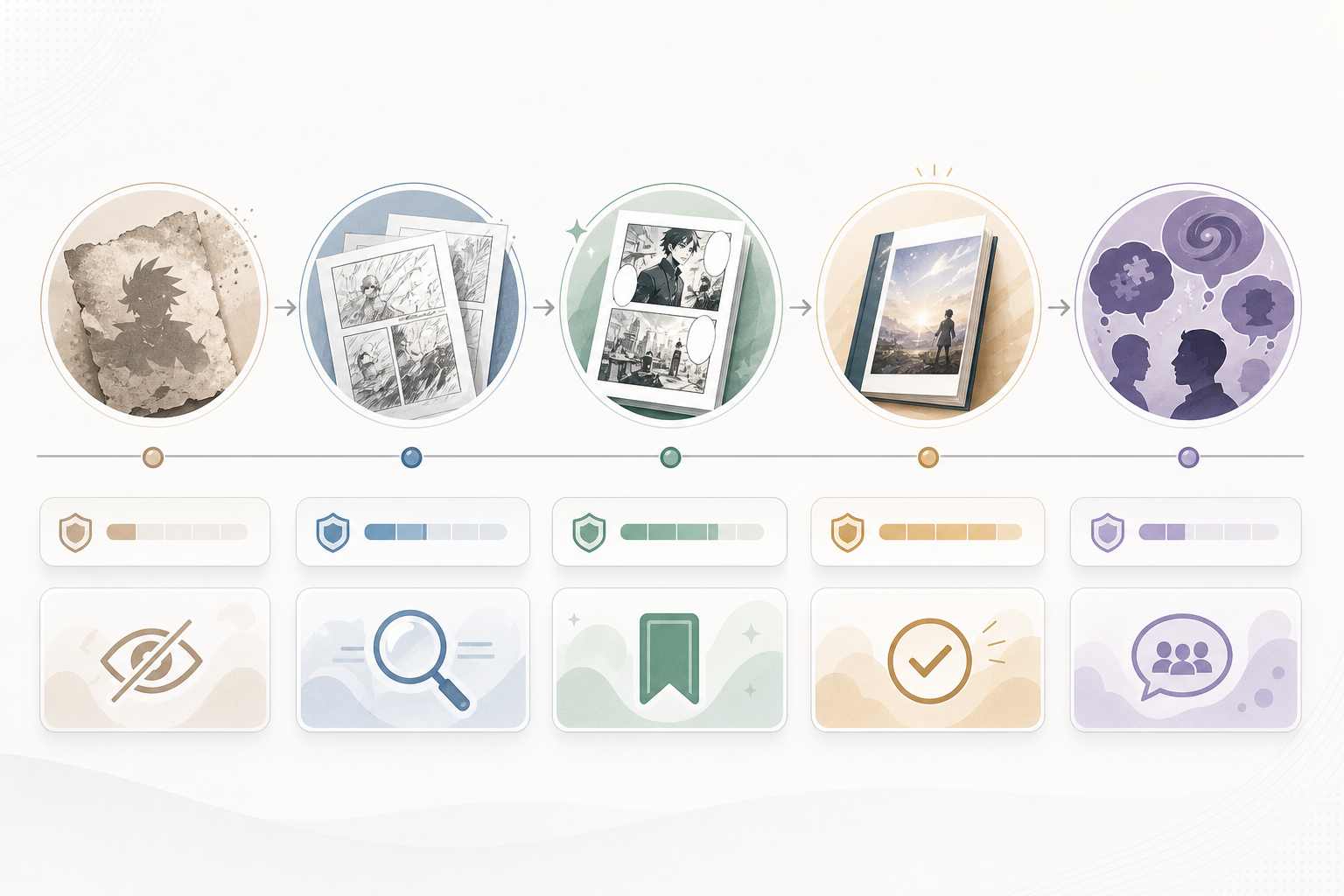
- Leaks: Early summaries, alleged details, or screenshots shared before full chapter pages are available. Treat these as unverified.
- Raw pages and scanlations: Readers can see more context, but unofficial translations may differ in wording or tone.
- Official release: Use the officially published chapter as the baseline for a canon discussion, especially when a debate turns on one line of dialogue.
- Theory wave: Fans connect the chapter to earlier arcs, character motives, and future plot points. This is the fun part, but it is still interpretation unless the chapter states it plainly.
A post can be smart and still be based on an early version. Source labels matter more than how confident the writer sounds.
Use three labels: Leak, Scan, and Canon
Give every important claim one of these labels as you read:
- Leak: Information reported before full pages are available. It may be incomplete, mistranslated, or false.
- Scan: A claim based on unofficial pages or a fan translation. It can be useful evidence, but it is not the final wording.
- Canon: What the officially published chapter shows or says. This is the best starting point for claims about what happened in the story.
You do not need to police every casual comment. Use the labels when a claim affects a theory, a character reading, or an argument about continuity.
For example: “[Scan] This line makes it sound like he knows the secret” is clear and fair. “This proves he knows the secret” is not, unless the official chapter supports that reading.
Apply the quarantine rule to leaks
Leaks can be exciting. They do not need to ruin the discussion if they stay in the right lane.
The quarantine rule is simple: keep leak-based ideas in a temporary category until the official chapter is available. Do not use them as proof in a canon debate, a character timeline, or a reference post. When the official release arrives, either promote the claim with a chapter citation or drop it.
This prevents a common spiral: a leak gets repeated as fact, a theory grows around it, and readers later argue over a detail that never appeared in the chapter.
Identify what a post is actually claiming
A clean discussion separates the event, the evidence, and the conclusion. Many confusing threads blend all three into one dramatic sentence.
Read every argument as a claim map
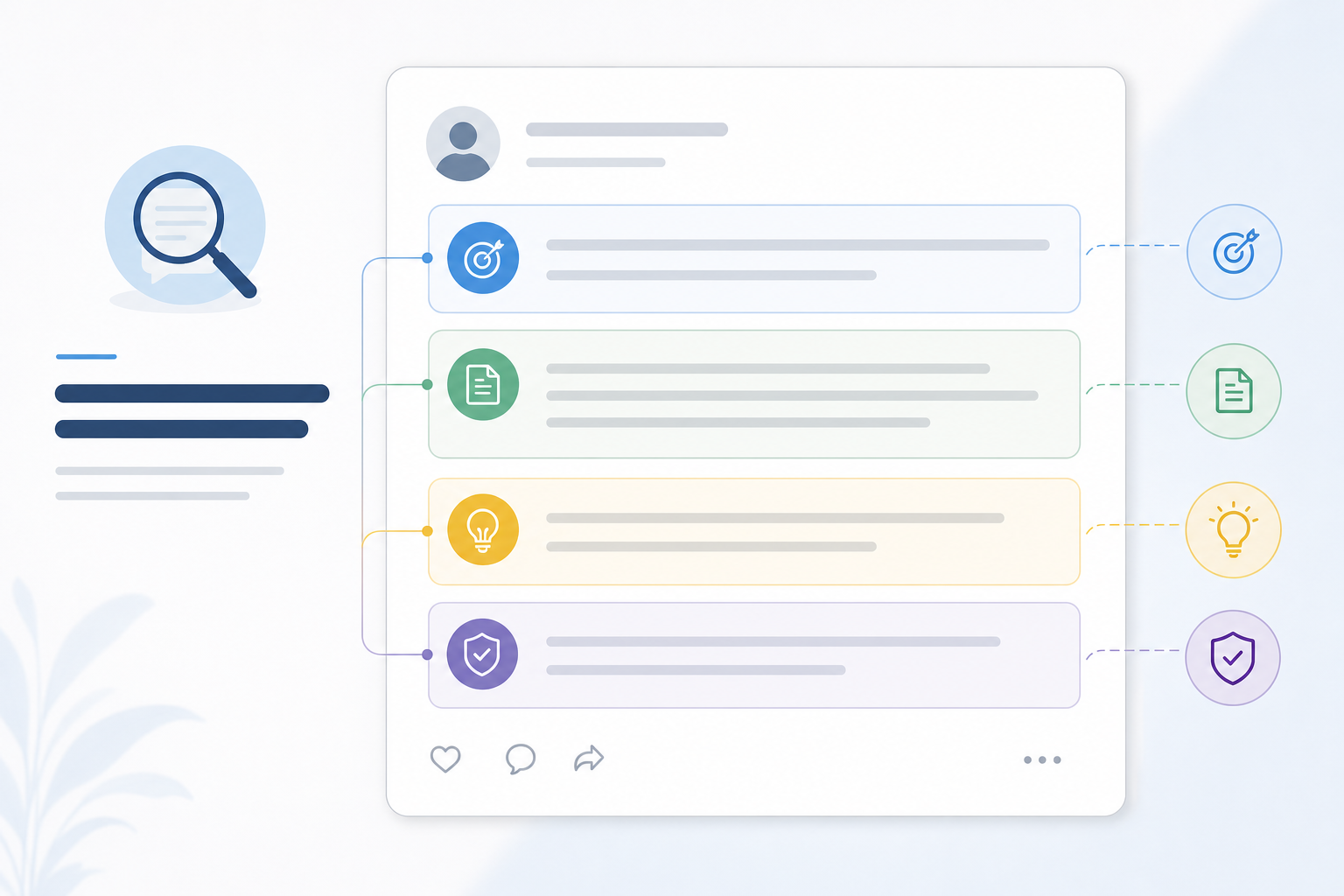
Turn a busy comment into four parts:
Claim → Evidence → Interpretation → Confidence
Here is a fictional example:
- Claim: A character hesitates before acting.
- Evidence: Their expression changes in the final panel of the scene.
- Interpretation: They may be torn between duty and loyalty.
- Confidence: Medium. The panel supports hesitation, but not a full explanation of motive.
The claim is not automatically wrong because the interpretation is uncertain. It simply needs the right label. This leaves room for good theories without pretending that every theory is confirmed.
If you enjoy tracing a character across several story periods, the same structure works beyond one chapter. How to Track Smoker Role Across Arcs shows why a continuity map is more useful than relying on a single remembered scene.
Watch for the red flags in fast-moving threads
Pause when you see any of these patterns:
- “Everyone knows” with no chapter or panel reference.
- A cropped image that hides the next panel, speaker, or reaction.
- A quote with no translation named.
- A theory presented as a recap.
- A claim that changes each time someone asks for evidence.
- An old scanlation cited after the official chapter is available.
The best response is often short: “Which chapter and panel is that from?” That question is not hostile. It gives the discussion a shared place to start.
Distinguish summary from analysis
Reaction posts often contain three useful layers:
- Summary: What the chapter visibly shows.
- Analysis: Why a scene may matter, based on story context.
- Speculation: What could happen next.
Read these as different kinds of statements. A chapter breakdown such as Blackbeard’s Bounty — One Piece Chapter 925 Discussion can be a helpful grounding point for a past chapter, but its theories remain analysis rather than a canon source.
Check citations before you repeat a claim
Good citation habits make chapter threads easier to read and much harder to derail. You do not need academic footnotes. You need enough detail for another reader to find the same moment.
Use the chapter, scene, and translation method
For a meaningful canon claim, include:
- Chapter number — not just “the recent chapter.”
- Page, spread, or panel description — page numbering can vary by edition, so describe the moment when needed.
- The relevant wording — quote a short line instead of paraphrasing a major claim.
- Translation type — say whether you mean an official release or an unofficial scan translation.
A useful format is:
> Chapter 926, prison scene, final panel of the exchange — official release: “[short quote].” My read is that this suggests X, but it does not confirm Y.
That last sentence matters. It makes the line between evidence and interpretation visible.
Why translation differences create fake plot holes
One Piece dialogue can carry tone, puns, titles, or deliberate ambiguity. An early translation may make a character sound certain where another version sounds cautious. A word that seems to describe a power rule may instead describe a personal choice.
Before calling something a contradiction, ask:
- Are both readers using the same chapter version?
- Is the disagreement about the event itself or about one word?
- Does the full scene add context that the quoted line leaves out?
A simple fictional contrast shows why this helps:
- “I won’t do that” suggests refusal.
- “I can’t do that” suggests a limit or inability.
Those lines point to very different theories, even though they look close at a glance.
The same care helps when comparing manga and anime choices. How to Compare Anime and Manga Character Portrayals offers a useful way to separate an adaptation choice from a change in the manga text.
Correct misinformation without turning it into a fight
When a reader has the wrong source or an outdated translation, lead with the text instead of the person.
Try this pattern:
- Acknowledge the reading: “I can see why that wording gives that impression.”
- Name the source: “The official release in Chapter X phrases it differently.”
- Point to the scene: “Check the panel after that line too.”
- State the limit: “It supports this possibility, but it does not confirm it yet.”
Avoid “learn to read,” “debunked,” and similar victory language. The goal is a better thread, not a louder one.
Read spoilers on your own terms
Spoiler etiquette is not one universal rule. Every forum, server, and comment section may set its own boundaries. Still, a few habits work almost everywhere.
Know which spoiler tier you are entering
Before scrolling, check the post title, tags, and first sentence. Look for labels such as:
- [Leaks] for early summaries or alleged details.
- [Raw] for untranslated or lightly translated images.
- [Scans] for unofficial chapter pages and translations.
- [Official] or [Release] for discussion after official publication.
- [Anime] for material that may spoil viewers who do not read the manga.
If the label is missing, assume the thread may contain spoilers and do not open images until you know what release it covers.
Build a safer browsing routine
The safest order is still: read the chapter first, then open the discussion. If you want to stay unspoiled before that, use a few practical barriers:
- Mute terms such as “leaks,” “raws,” “spoilers,” and the upcoming chapter number where your platform allows it.
- Avoid trending tabs and image-heavy feeds during the chapter cycle.
- Disable or skip image previews when possible.
- Do not open a post with a revealing title, even if its body claims to be spoiler-tagged.
- Leave a thread as soon as you see a source tier you did not agree to read.
If you are catching up on an older storyline, a spoiler-light reading path for Robin and Ohara can help you control the order in which you revisit major story material.
Write titles that do not spoil people
A title can spoil more readers than the post itself. Keep titles neutral and put the source tier first.
Better: [Official Chapter Discussion] A question about the final scene
Worse: [Official] Character X returns and reveals Y
Do the same with images. A panel used as “proof” is still a spoiler if it appears before a warning. Add a clear spoiler notice and follow the rules of the space where you are posting.
A repeatable five-minute reading routine
Use this process when a new discussion is moving too fast:
- Check the label. Is the thread about leaks, scans, or the official release?
- Read the chapter or accepted source first. Do not let a headline become your first version of the event.
- Mark the post’s claim. What, exactly, is the writer saying happened or will happen?
- Find the evidence. Look for a chapter number, panel, full scene, and translation type.
- Separate fact from theory. Keep the event, its meaning, and the prediction in different mental boxes.
- Reply with context. Use claim → evidence → interpretation, and state uncertainty where it exists.
This method takes very little time once it becomes a habit. It also makes theory debates better. You can disagree about motives, future reveals, and symbolism while still agreeing on what the chapter actually showed.
The goal: better theories, not fewer theories
Once you know how to read chapter discussion posts, you do not have to choose between being careful and having fun. Leaks can stay exciting, scans can spark early ideas, and theories can go as far as your imagination allows—as long as each is labeled honestly.
When you enter a thread, bring one useful thing: a clear source, a complete panel, a fair alternative reading, or a question that helps everyone check the text. That is how chapter discussions stay lively without becoming confusing.