

Joy Boy discussions can get spoiler-heavy fast. If you want to know how to evaluate Joyboy claims without spoilers, start with a firm viewing boundary and judge each claim only by material you have already seen or read.
The goal is not to kill the fun of theory crafting. It is to tell the difference between a solid observation, a plausible read, and a leap that needs future knowledge to work.
Set a spoiler boundary before you open a theory
“Anime-only” is helpful, but it is not precise enough for a lore debate. State the last arc, episode, or chapter you completed. That gives other fans a real limit to respect.
Try this:
> I am safe through [arc name / episode number / chapter number]. Please use only material available by that point, and label speculation.
Using one piece arcs in order as your map is often safer than searching a character or lore term by itself. Arc names help you filter discussions, organize notes, and leave a thread before it crosses your line.
For a good example of following evidence across appearances rather than relying on a single claim, see How to Track Smoker Role Across Arcs. The same habit works well for Joy Boy theories: follow what is actually shown, in sequence.
Decide what counts as a spoiler
For this topic, treat these as possible spoilers unless they fall within your boundary:
- A name, title, identity, or role presented as “confirmed” without a source you have reached
- Screenshots, panels, episode stills, or chapter numbers from later material
- “You will understand later” comments
- Video thumbnails that promise a “true identity,” “final answer,” or “everything explained”
- A theory that only makes sense after someone supplies missing context
A simple rule helps: if you could not verify the point by reopening an episode or chapter you have already finished, it is not safe evidence for you yet.
Use four evidence tiers for Joy Boy claims
Not every theory needs to be wrong to be uncertain. These tiers let you discuss an idea without giving it more weight than it has earned.

| Tier | What it includes | How to describe it |
|---|---|---|
| 1: Direct | Clear dialogue, narration, or text shown in your completed material | “The story states this.” |
| 2: Supported | Two or more separate details that point in the same direction | “This is supported, but not confirmed.” |
| 3: Official extra | A specific SBS answer, databook entry, or other official material with exact wording | “This is official context; check the original source.” |
| 4: Inference | Symbolism, parallels, predictions, fan connections, or unsourced summaries | “This is a theory.” |
Tier 1: Direct story evidence
Tier 1 is the safest ground. It includes a direct statement, a narration box, or text that the story clearly shows within your boundary.
Ask for the exact episode or chapter, then check the full moment. A real quote can still be used out of context. Who said it? What did they know? Was the line a guess, a joke, or a statement of fact?
Tier 2: Repeated support
A repeated pattern can make a theory more interesting, but patterns are not automatic proof. Look for at least two independent details.
For example, two clues are not independent if both depend on the same unproven idea. If the first clue says a symbol has one meaning and the second clue only works because that meaning is assumed, you still have one uncertain clue.
Tier 3: SBS, databooks, and official extras
SBS answers and databooks can be useful, especially when they give a direct answer or clarify a term. They are not a shortcut around your spoiler boundary, though. An official source can still discuss material you have not reached.
Before using one, ask for the exact entry or question. Avoid screenshots with no publication details, cropped wording, or claims that an unnamed databook “confirmed” something.
If you compare anime and manga material, apply the same source discipline. This practical rubric for comparing anime and manga character portrayals can help you separate an adaptation choice from a claim supported by the original scene.
Tier 4: Fandom inference
This is where theories live: identity links, ancient timelines, hidden motives, symbolic echoes, and power debates. Tier 4 can be creative and well argued. It simply is not confirmation.
A Reddit post such as this Luffy and Joy-Boy analysis is best treated as a fan interpretation to examine, not as evidence on its own. Follow its references back to material inside your boundary before accepting any part of the argument.
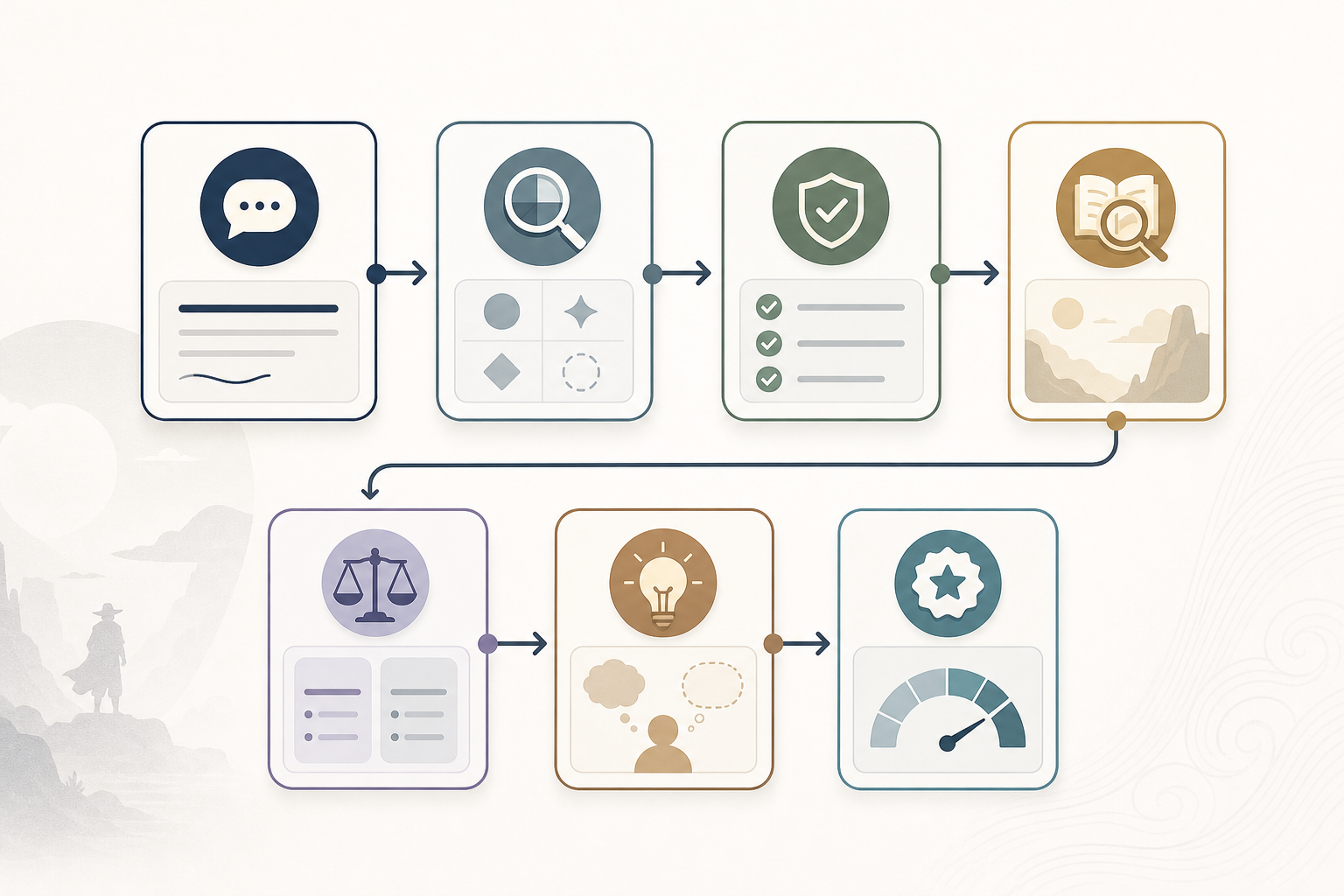
Test a Joy Boy claim in seven steps
Use this checklist before you share, save, or argue with a theory.
1. Rewrite the claim as one clear sentence
Do not judge a feeling like “this seems obvious.” Write the actual claim.
Examples:
- “Joy Boy is the same person as Character X.”
- “This event happened in a certain era.”
- “This symbol proves a particular motive.”
A clear sentence exposes what must be proven.
2. Name the claim type
Most Joy Boy arguments fit one of five types:
- Identity: Who is Joy Boy, or who is connected to that name?
- Timeline: When did an event happen?
- Motive: Why did a character act or react?
- Power: Who is stronger, and by what measure?
- Theme: What idea does a symbol, phrase, or parallel suggest?
Do not let a theory slide from one type to another. A thematic parallel does not prove a bloodline. A powerful scene does not establish a timeline.
3. Find the earliest source
Go to the episode, chapter, SBS entry, or databook page if you can. A recap, short-form clip, wiki sentence, or comment should only point you toward the original source.
If the post cannot name a source, lower its confidence right away.
4. Check the full context
Read or watch around the cited moment. Then ask:
- Is the speaker reliable and informed?
- Does the scene offer another reading?
- Is the wording from an official translation or an unverified one?
- Has the post removed a qualifier such as “perhaps” or “I think”?
A theory can cite a real line and still overstate what it means.
5. Look for an alternative explanation
You do not need future spoilers to test logic. Ask what else the clue could mean based on the story so far.
A repeated image may support a theme. It does not necessarily identify a person. A character’s reaction may show concern without proving a specific fear or plan.
6. Mark assumptions in plain language
Words such as “must,” “obviously,” and “definitely” often hide the weak point. Replace them with a question:
> What has to be true for this conclusion to follow?
If the answer is “a detail the story has not stated,” label that step as an assumption.
7. Give the claim a confidence level
Use simple labels:
- High: Direct evidence supports the claim and no clear contradiction appears within your boundary.
- Medium: Several clues support it, but an important link is still inferred.
- Low: One clue carries the whole argument, the source is vague, or major assumptions fill the gaps.
This does not settle a theory forever. It tells you how strongly you can state it today.
Common Joy Boy claims that rely on assumptions
The most common weak theories are not always wild. Often, they make one reasonable observation and then take two or three unsupported steps beyond it.
“Joy Boy is definitely related to Luffy”
First, define “related.” People often blend three different ideas together:
- Bloodline: a literal family connection
- Inherited will: a shared promise, goal, or role across eras
- Thematic parallel: similar choices, imagery, or ideas
Each needs different evidence. A thematic parallel may be worth discussing, but it does not prove family ties. The safest verdict is usually: “There may be a connection, but the type of connection is not established by this clue alone.”
“Who is stronger than Joy Boy?”
This question needs a metric before it can have a useful answer. Does “stronger” mean physical force, combat skill, influence, endurance, leadership, or something else?
Then check the era and context. Comparing characters across different times, incomplete accounts, or different situations can turn a fun debate into fan math with no stable base. Unless the story supplies a clear comparison, treat rankings as speculation.
“Imu is afraid of Joy Boy because of one motive”
Motive claims are especially easy to overread. Separate what the story directly says from what fans infer from behavior, symbols, or framing.
A stronger motive theory gives at least two independent supports and admits other possibilities. A weaker one treats a reaction as a complete explanation.
“This symbol confirms everything”
Symbols can be excellent evidence for themes and echoes. They are weak evidence for exact identities, dates, and secret plans unless the story directly connects them.
The useful question is not “What does this prove?” Try: “What does this make more plausible, and what would still need proof?”
Search and discuss safely without feeding the spoiler machine
Search engines, video platforms, and comment sections often reveal more than a theory itself. Build a small routine before you research.
Use boundary-first searches
Add your safe point to the query. For example:
Joy Boy anime-only no spoilers up to [arc]Joy Boy theory up to episode [number]Joy Boy first mention spoiler-free
Avoid image search. Be cautious with autocomplete and video recommendations, which can surface titles and thumbnails from much later in the story.
Vet a video or thread before opening it
Check the title, preview text, and date. Leave if you see chapter numbers you have not reached, “latest” framing, or language about final answers. Do not scroll comments for reassurance; comments are often where unmarked spoilers land.
A spoiler-light reading approach can also help when you want background on a subject without jumping ahead. See How to Read Robin and Ohara’s Story in Order for a useful model: go broad first, then narrow your focus only when you know the material is safe.
Keep a short claim log
A basic note stops you from confusing a memorable post with a confirmed source.
- Claim:
- Claim type: identity, timeline, motive, power, or theme
- Source: episode, chapter, SBS, databook, or fan post
- Safe boundary:
- Evidence tier:
- Alternative reading:
- Confidence: high, medium, or low
If you cannot fill in the source and boundary fields, do not present the idea as confirmed.
Quick answers for spoiler-sensitive readers
What counts as safe, confirmed Joy Boy evidence?
Evidence is safe when it appears in material you have completed. It is confirmed only when the story directly states or clearly shows it. A screenshot or quote is not safe if it comes from beyond your boundary.
Are SBS and databooks reliable for Joy Boy claims?
They can be useful official sources when you can identify the exact entry and read its full wording. They should not replace the manga or anime scene, and they can still contain spoilers for readers who are earlier in the story.
What episode do you learn about Joy Boy?
There is no single safe episode answer for every reader because even naming a later point can spoil the shape of the reveal. Search by your current arc or episode boundary, use spoiler-free episode summaries, and stop when a result begins to describe later events.
How can I avoid spoilers in comments and thumbnails?
State your boundary in your post, mute terms tied to future arcs where your platform allows it, avoid image search, and leave comment sections quickly. A theory is not worth losing a major story moment.
The spoiler-safe verdict
Good Joy Boy theories make their sources easy to check, separate direct facts from interpretation, and stay honest about uncertainty. Weak theories often depend on a single symbol, a vague “Oda hinted” claim, or knowledge they will not explain without spoiling you.
That is how to evaluate Joyboy claims without spoilers: set your boundary, use the four tiers, and ask what each conclusion still needs to prove. You can enjoy the mystery now without borrowing answers from a part of One Piece you have not reached.