How to Track Smoker Role Across Arcs: A Continuity Map of His Shifting Justice in One Piece

If you’re searching how to track Smoker role across arcs, you want a clean One Piece continuity map—where he shows up, what he wants, and how his “justice” s…

To learn how to track Smoker role across arcs, do more than list his fights with Luffy. Watch the tension between his orders, the people at risk, the facts he learns, and the choice he makes when those things collide.

The fastest useful route is Loguetown, Alabasta, and Punk Hazard. Together, these arcs show Smoker moving from a direct Marine pursuer to an officer whose idea of justice is tested by events that do not fit a simple pirate-versus-Marine frame.

This is a rewatch tool, not a full episode guide or a claim that Smoker stops opposing pirates. Use it to collect evidence from key scenes, then decide what has changed and what has stayed firm.

Build a simple Smoker continuity sheet

Use one row for each arc. You only need one or two meaningful scenes per stop; a full plot recap will hide the pattern.
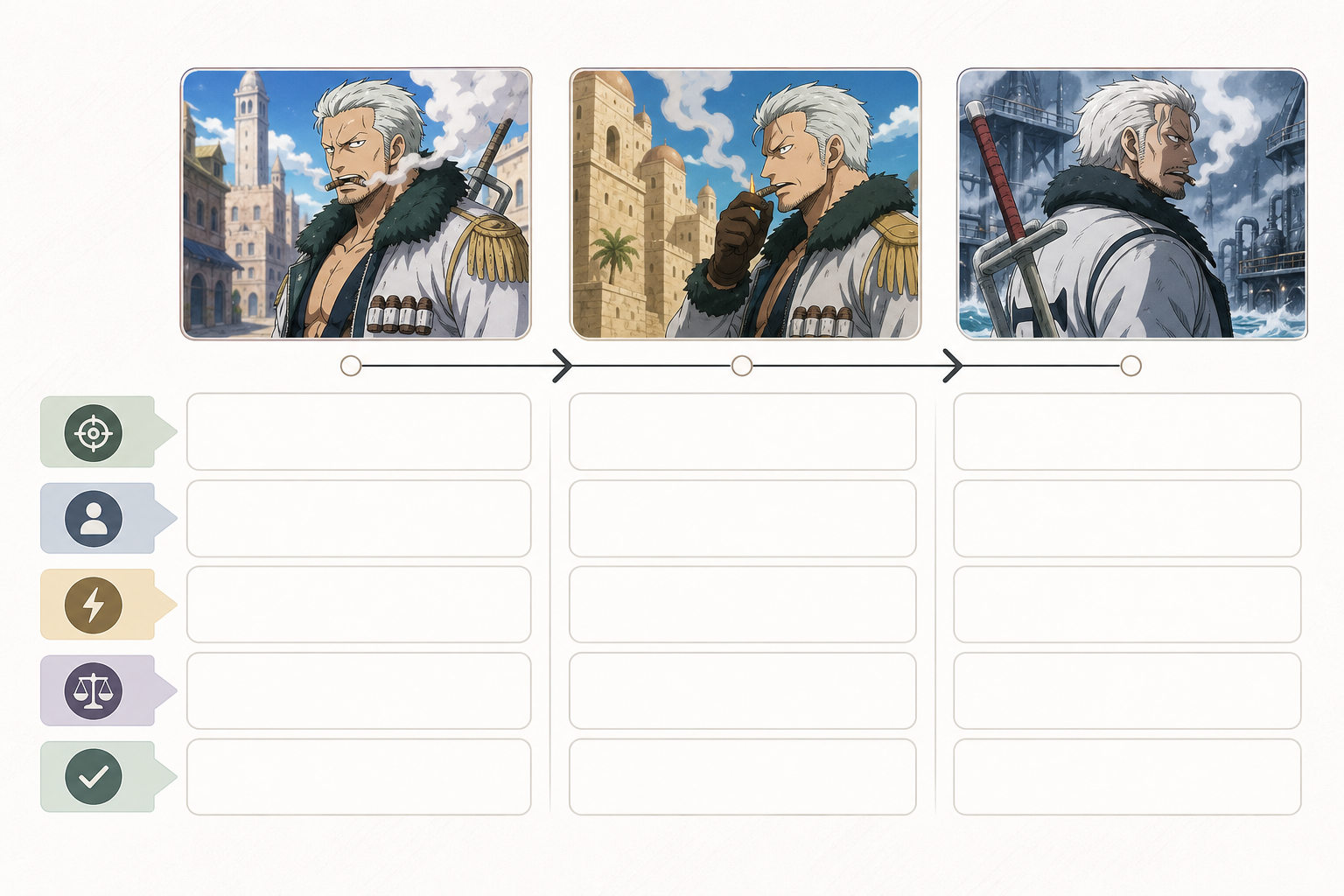
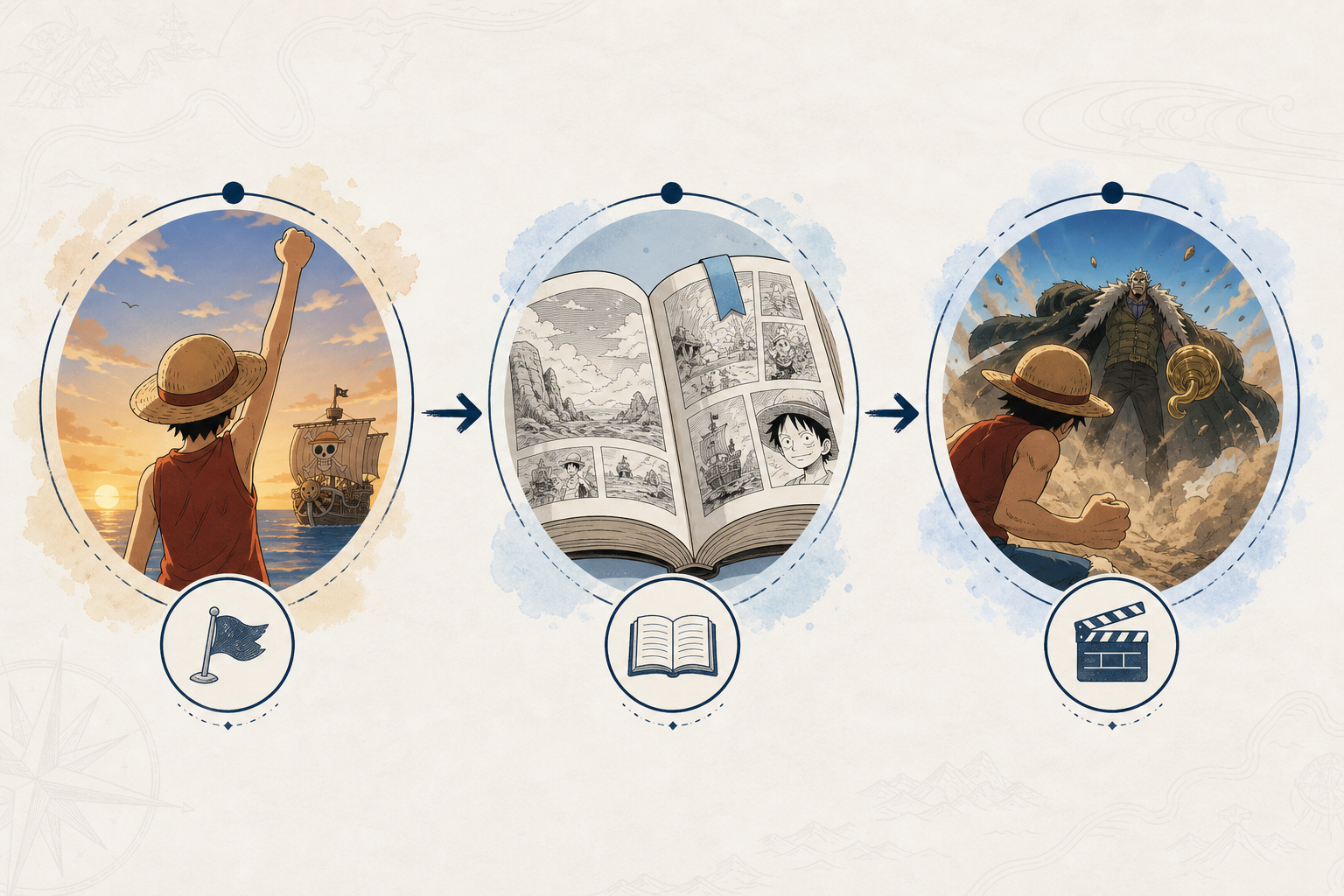
Three-arc Smoker rewatch map with five continuity-note fields.
Use the same five fields at every stop to compare Smoker’s decisions rather than just his appearances.
Arc checkpoint What to track Useful question
Loguetown Mission, first view of Luffy, outcome Does Smoker see Luffy as a routine target or an unusual pirate?
Alabasta Orders, public story, responsibility What does he do when the official account feels incomplete?
Punk Hazard Civilians, teamwork, abuse of power What matters when a normal arrest cannot solve the larger danger?

For every scene, add five short fields:

  1. Goal: What does Smoker want to do?
  2. Target: Who does he think is the main danger?
  3. Pressure: What complicates the situation: orders, civilians, a cover-up, or a stronger enemy?
  4. Choice: What does he actually do?
  5. Result: Does the moment affect how he views pirates, Marines, or authority?

A note can be as short as this:

> Punk Hazard — pressure: civilians and a wider threat. Choice: temporary cooperation becomes necessary. Result: the immediate harm matters more than faction labels.

This format separates what the plot needs Smoker to do from what his choices reveal about him.

Use the three-layer method before judging a scene

Smoker can look contradictory if every scene is reduced to one question: “Is he helping Luffy or chasing him?” A better approach is to give each scene three separate readings.

Layer What it tells you Prompt for your notes
Plot function What job does Smoker serve in the story right now? Is he an obstacle, investigator, witness, or temporary partner?
Moral stance What does he appear to believe is right? Is he prioritizing truth, safety, responsibility, or punishment?
Institutional pressure What does being a Marine require or encourage him to do? Does an order, rank, report, or official narrative narrow his options?

The layers often overlap, but they should not be treated as identical. Smoker can fulfill the plot role of pursuing the Straw Hats while still responding negatively to a dishonest account of what happened. Likewise, cooperation in a crisis does not automatically mean he has abandoned his duty.

This method also keeps your rewatch from turning into a collection of isolated “gotcha” moments. A single harsh line may reflect anger or urgency. A pattern of choices across several arcs is stronger evidence of how he sees justice.

Start with Loguetown: Smoker’s baseline

Loguetown gives you the clearest starting point. Smoker is a Marine officer pursuing pirates because that is the threat in front of him. His pursuit of Luffy matters because Luffy does not neatly match the worst pirate behavior Smoker expects to confront.

Do not treat the arc as a moral turnaround. It works better as the first test of a view that initially seems simple: pirates must be stopped, but individual pirates may not all present the same kind of danger.

Tag this stage law-first. Then write a one-line baseline, such as: “Pirates must be stopped, even when they do not fit the usual pattern.”

What to log in Loguetown

  • Smoker’s stated or implied reason for chasing Luffy
  • Whether he treats Luffy differently from other threats nearby
  • The point where he loses control of the chase
  • His reaction when the pursuit does not end as planned

The important evidence is not just that Luffy escapes. It is whether Smoker’s response leaves room for doubt, respect, frustration, or all three at once.

A useful Loguetown checkpoint

After the arc, avoid writing “Smoker respects Luffy now” unless the scenes support that exact conclusion for you. A more careful note is: “Smoker has encountered a pirate he still intends to arrest, but the encounter complicates a purely routine view of the target.”

That distinction matters later. Smoker’s role is compelling partly because recognition does not erase conflict. He can understand that someone is unusual and still see his own duty as requiring pursuit.

Use Alabasta to track doubt in the system

Alabasta is the major checkpoint for Smoker’s changing relationship with Marine authority. The arc asks a sharper question than “Can he catch the Straw Hats?”: what does he do when pirate status, Marine rules, and public praise do not explain the real danger on the ground?

The setting matters here. The official Bandai Namco recap of Alabasta highlights Smoker’s collision with the Straw Hats and the larger Crocodile crisis. On a rewatch, focus less on the fight order and more on the moments involving blame, credit, and the public version of events.

For the opposing force behind that crisis, revisit Crocodile’s role in One Piece. Vivi’s story in One Piece is also useful context for the arc’s civilian and political stakes.

Alabasta scenes worth flagging

Look for scenes with these signals:

  • A threat bigger than the pirate chase. Record how Smoker identifies the real danger.
  • A struggle over credit and truth. Note who receives public praise and how Smoker reacts.
  • Pushback against a neat official story. Ask whether his idea of justice reaches beyond appearances.
  • A decision made after new information arrives. Compare his early assumption with his later response instead of treating the whole arc as one fixed position.

Tag Alabasta as institutional doubt. This does not mean Smoker suddenly trusts pirates or rejects the Marines. It means authority no longer looks like a complete measure of justice.

A fan-maintained Smoker character reference likewise describes him as following a personal code rather than Absolute Justice. Treat that as a useful reference point, then use the scenes themselves to support your own reading.

Separate Smoker’s plot role from his moral stance

Smoker is easier to follow when you do not force him into one fixed label. He can block Luffy, respect an opponent’s ability, accept short-term help under pressure, and later return to pursuing pirates. Those actions can look inconsistent only if “enemy” and “ally” are the only options in your notes.
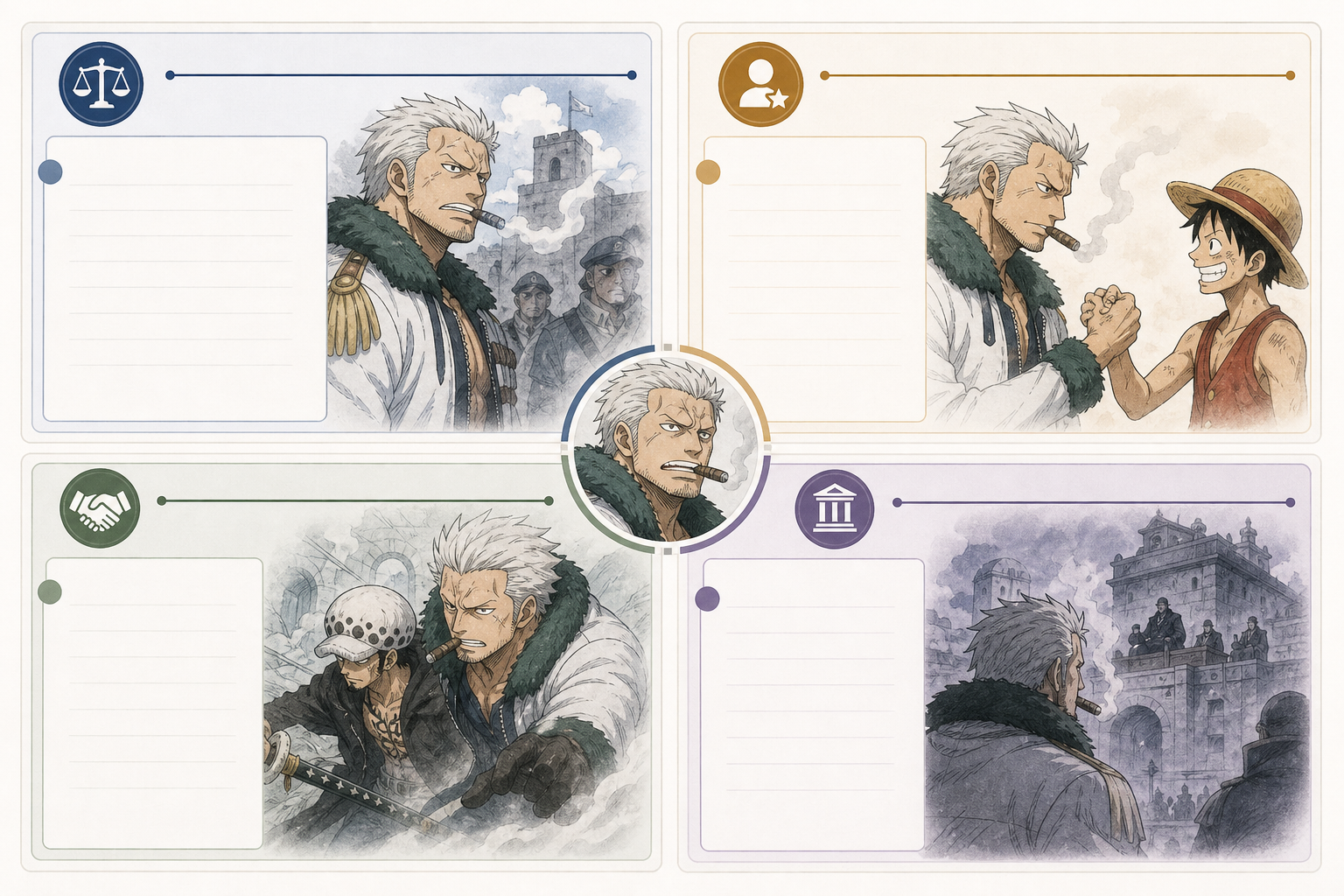
Four note tags for tracking Smoker’s changing stance.
These tags make room for Smoker to oppose pirates while still questioning how justice is applied.

Use these tags instead:

Tag What it means in your notes Scene signal to watch for
Law-first Duty and arrest come before nuance Pirate status drives his first response
Professional respect He recognizes skill or courage without excusing crime His view of a person changes, not his job
Tactical cooperation A shared short-term goal outweighs hostility He accepts help against a worse threat
Institutional doubt Authority clashes with his sense of justice He resists a false or incomplete official account
Civilian priority Immediate safety becomes the clearest concern He responds to people endangered by a larger conflict

The most useful overall label is recurring Marine counterweight. Smoker remains a real obstacle to Luffy, but each crisis tests how he applies that duty. His long-term tension is clear: the badge matters to him, yet so does the truth of the situation.

Track Tashigi as an ethical mirror

When Smoker and Tashigi share a scene, make separate notes for each. What is each trying to protect: civilians, subordinates, Marine duty, the mission, or the truth?

This prevents a common mistake. Smoker’s rough tone is not a full explanation of his values. His choices under stress usually tell you more.

The same pressure-choice-result method can help with other character arcs. For a different kind of growth map, see how Usopp changed after the One Piece time skip.

Use Punk Hazard to test Smoker’s later role

Punk Hazard is the strongest checkpoint for asking whether the doubts raised in earlier arcs affect Smoker’s actions. For each key scene, write a simple chain: pressure → choice → result.

Field What to write
Pressure What makes a routine pirate chase too limited?
Choice What does Smoker put first at that moment?
Result Does the choice protect people, expose wrongdoing, or change a short-term alliance?

The key distinction is between trust and need. If Smoker works with people he would normally oppose, do not call it friendship or a permanent alliance right away. Write down the danger that makes cooperation useful, then note what happens after that danger passes.

Tag Punk Hazard as principled pragmatism. It is the clearest place to ask whether Smoker judges events by faction alone or by who is causing harm and who needs protection.

Compare the beginning and end of the arc

For a quick Punk Hazard card, write two sentences rather than a long recap:

> At the start: Smoker approaches the situation through his Marine mission and the visible threats.
> By the end: What he has learned about the danger, the people involved, and the limits of a simple faction-based response shapes his next choice.

Then fill in the specific scene that made you write the second sentence. If you cannot identify that scene, your conclusion may be too broad. Go back and find the dialogue, refusal, decision, or aftermath conversation that actually carries the change.

For a broader discussion of where that growth might lead, read our guide to Smoker’s future role. Use that page after this one: this tracker focuses on the arc-by-arc evidence, while the other considers possible future directions.

Rank the biggest value shifts for a focused rewatch

This is a fan-friendly shortcut, not an objective score for character growth:

  1. Alabasta: The best arc for tracking Smoker’s doubts about public stories and justice within the system.
  2. Punk Hazard: The best arc for tracking how he acts when protecting people requires practical, temporary teamwork.
  3. Loguetown: The essential baseline that makes the later shifts easier to see.

The short answer is that Alabasta and Punk Hazard show Smoker’s biggest value shifts. Alabasta changes the questions he must ask about justice. Punk Hazard tests whether those questions shape his actions.

Avoid the two common continuity mistakes

First, do not mistake a temporary alliance for a complete change of sides. Smoker’s willingness to work around a shared danger can reveal pragmatism, but it does not settle every question about his view of pirates.

Second, do not mistake Marine rank for a complete moral profile. The interesting material is often the gap between what the institution expects, what the immediate situation demands, and what Smoker chooses to defend. Your sheet should preserve that gap instead of forcing a clean answer too early.

A good final note can include uncertainty. For example: “Smoker still operates as a Marine pursuer, but this arc gives stronger evidence that he judges official outcomes by whether they reflect what actually happened.” That is more useful than declaring him fully loyal or fully disillusioned.

Follow the fast Smoker rewatch route

You do not need a full-series rewatch to make a useful continuity map. Return to Smoker’s major scenes in Loguetown, Alabasta, and Punk Hazard. After each arc, answer the same three questions:

  1. What did Smoker seem to believe at the start?
  2. Which person, fact, or crisis tested that belief?
  3. What did he put first when pressure rose?

Use this copy-and-paste card for each stop:

> Arc:
> Starting stance:
> New fact or pressure:
> Choice under pressure:
> What stayed consistent:
> What may have shifted:
> Scene to revisit:

Your notes may move from “catch pirates” to “find the real threat” to “judge events beyond their labels.” If they do, you have a clear view of Smoker’s long-term role.

That is the core of how to track Smoker role across arcs: follow the pull between the badge, the mission, and the conscience behind his choices. Keep the sheet after your first pass. When you revisit another Smoker appearance, add one row using the same five fields. The pattern will tell you more than any single fight.
One Piece Watch Order: Minimal-Filler Arc Guide

If you searched for one piece watch order, you’re not asking for lore. You want a practical workflow: what to watch first, what to skip, and when optional st…

A One Piece watch order is simple at its core: watch the main anime story in release order, skip filler only when you want to, and treat movies as optional extras. The hard part is keeping momentum through a very long series without skipping an arc that matters.

This guide uses arc checkpoints instead of a brittle episode-by-episode list. That makes it useful whether you are starting from episode one, returning after a break, or trying to catch up without turning the show into homework.

The short version: the best way to watch One Piece

For most new viewers, this is the safest plan:

  1. Watch the canon story arcs in order.
  2. Skip clearly labeled anime-original filler if catch-up speed matters to you.
  3. Do not skip a canon arc simply because it is slower or less popular. It may set up characters, places, or ideas that return later.
  4. Use the manga when anime pacing starts to wear you down, then return to the anime for scenes you want to see performed and animated.
  5. Save movies, specials, and OVAs for arc breaks. They are bonuses, not required plot steps.

If you need a legal platform first, start with our guide on where to watch the One Piece anime. Streaming catalogs differ by country, but the story order does not.

Understand canon, filler, and padding before you skip

Canon is the main story

Canon material adapts Eiichiro Oda’s manga. It includes the plot, character growth, world history, and reveals that the series builds on over time. For a first watch, canon arcs are the core route.

That does not mean every canon episode moves at the same speed. The anime may extend reactions, travel, flashbacks, or fights. Slow pacing is not the same thing as filler.

Filler is optional anime-original material

Filler is story material made for the anime rather than adapted from the manga. It often appears as a short side adventure between larger arcs. Most of it can be skipped without losing the main plot.

A useful rule is simple: skip an arc only when a reliable episode guide identifies it as anime-original filler. Do not guess based on whether an episode feels low stakes. One Piece often hides meaningful setup in quiet moments.

Padding needs a different solution

Some episodes are partly canon but feel stretched. Skipping them can create confusion because the main story is still present. Try one of these options instead:

  • Watch at a faster playback speed if that works for you.
  • Skip recaps after you have already seen them.
  • Read that section in the manga, then return for scenes you want to experience in animation.

For a broad arc-by-arc reference while checking a possible filler break, Collider’s One Piece arcs in order guide is a useful second opinion. Always prioritize the story sequence over a platform’s season labels.

Minimal-filler One Piece watch plan by arc checkpoint

Every main arc below belongs to the larger story. The labels tell you where most viewers should slow down, where they may prefer the manga for pace, and where optional anime-original detours are easiest to leave out.

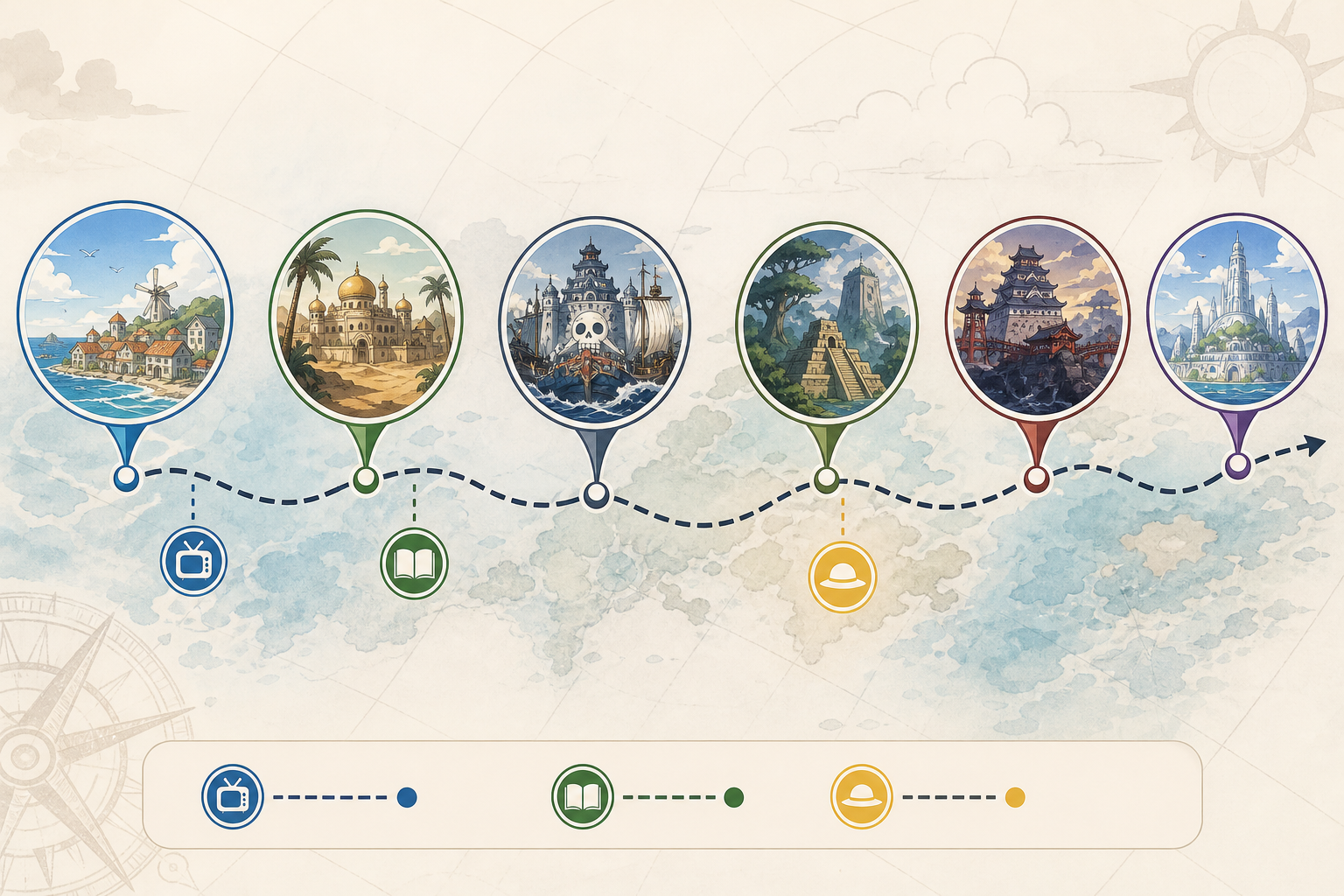
Spoiler-free One Piece arc checkpoint route from East Blue to the current anime story.
Use arc names as your progress markers when episode lists and streaming seasons differ.

East Blue through Alabasta: build the crew first

Watch: Romance Dawn, Orange Town, Syrup Village, Baratie, Arlong Park, Loguetown, Reverse Mountain, Whiskey Peak, Little Garden, Drum Island, and Alabasta.

This is the foundation. The early arcs introduce the crew’s values, the Grand Line, and the way One Piece connects personal dreams to a much larger world. Some early stories are lighter than others, but they are not disposable.

Minimal-filler move: Skip only the filler blocks that appear between these canon arcs. Keep the canon route intact.

Manga switch option: If the earliest anime pacing is not clicking, read a short stretch in the manga and return for Baratie, Arlong Park, Drum Island, and Alabasta. These arcs are especially rewarding with voices, music, and animation.

Mystery radar: Notice every mention of the World Government, old legends, and the difference between authority and freedom. Those ideas keep growing.

Jaya through Enies Lobby: do not rush the setup

Watch: Jaya, Skypiea, Long Ring Long Land, Water 7, Enies Lobby, and the post-Enies Lobby aftermath.

Water 7 and Enies Lobby are major emotional and plot landmarks, but the earlier material matters too. Jaya and Skypiea carry themes and worldbuilding that become more valuable as the series goes on. Long Ring Long Land is lighter in tone, yet it still belongs to the canon path.

Minimal-filler move: Take filler breaks only after a completed canon arc. Do not interrupt Water 7 or Enies Lobby once you begin.

Manga switch option: Skypiea is a reasonable manga-first choice for viewers who find its pace difficult. Return to the anime before Water 7 if you want the full impact of the performances.

Mystery radar: Watch how the story treats history, forbidden knowledge, inherited will, and the meaning of dreams. If you want a wider look at why these long-term payoffs work, read why the One Piece anime is so famous.

Thriller Bark through the Summit War: watch the turning point

Watch: Thriller Bark, Sabaody Archipelago, Amazon Lily, Impel Down, Marineford, and the post-war story.

This stretch changes the scale of the series. Earlier arcs show a crew finding its place in the world. Here, the world pushes back hard.

Minimal-filler move: Skip anime-original detours between arcs, but keep the main arc sequence. The post-war material is essential context for what comes next.

Manga switch option: Thriller Bark is a common point to read if you want to move faster. From Sabaody through the post-war story, many viewers prefer the anime because sound and performance add a great deal to key moments.

Mystery radar: Pay attention to the balance of power among pirates, Marines, and other major groups. The series is laying out rules that matter far beyond this era.

After the time skip through the current anime story: choose your pace

Watch: Return to Sabaody, Fish-Man Island, Punk Hazard, Dressrosa, Zou, Whole Cake Island, Reverie, Wano, and the current anime arc.

All of these arcs are part of the main story. They connect more tightly than the early saga structure may suggest, so skipping a whole canon arc will usually cost you setup later.

Minimal-filler move: This is the era where pacing concerns are most common. Skip pure filler, recaps you have just watched, and optional specials. Keep the canon plot, even when you decide to read it instead.

Manga switch option: Fish-Man Island, Dressrosa, and Wano are sensible checkpoints for a manga-first approach if you want faster progress. Finish a completed anime arc, then begin the next arc from its opening manga chapter or volume section. This avoids jumping formats in the middle of a fight or reveal.

The time skip itself is a major line between the two halves of the story. For a refresher once you reach it, see our breakdown of the One Piece two-year time skip.

Where to switch to the manga without losing the story

The best time to switch is at an arc boundary. Finish an arc in the anime, identify the title of the next arc, and start there in the manga. Avoid switching in the middle of a major conflict unless you have checked the matching chapter carefully.

Three-step process for switching from the One Piece anime to the manga at an arc boundary.
Switching at an arc boundary reduces duplicate viewing and avoids mid-scene confusion.

Choose anime-first if you want the full performance

Stay with the anime if music, voice acting, color, and extended action are the parts you enjoy most. You can still skip filler and recaps without changing the main order.

This route works well if you are not in a hurry. One Piece is built around long setup and emotional release, and animation can make those releases hit harder.

Choose manga-first if you want clean pacing

Read the manga if you want a faster route through canon material, clearer scene flow, and an easier way to revisit clues. It is especially useful during large arcs with many locations and characters.

Then return to the anime selectively for favorite scenes, major fights, or episodes friends recommend. This is not “missing” the anime. It is using both formats for what they do best.

For official and digital reading options, see our guide to reading One Piece manga.

Keep yourself spoiler-safe when changing formats

New manga readers can run into spoilers fast. Search tools, video thumbnails, and character pages may show information beyond your place in the anime.

Use arc names rather than character names in searches. Read only to the end of your current arc before looking up explanations. If you are taking notes for theories, record the chapter or episode number beside each clue.

Movies, specials, and OVAs: where they fit

Most One Piece movies are not part of the manga’s central continuity. They may borrow characters, places, or ideas from the main story, but you do not need them to understand the next canon arc.

The safest movie rule

Watch a film only after you have reached the point where its cast, outfits, powers, and setting will not spoil you. If a trailer shows a person or ability you have not met, save the movie for later.

The easiest placement is between completed arcs. Never stop halfway through a tense arc just to fit in a movie.

A movie-inclusive reference such as TheGamer’s viewing-order overview can help with release context. Treat any placement as optional and spoiler-check the film before pressing play.

A spoiler-light movie plan

  • Early films: Save them until the first core crew introductions are complete.
  • Mid-series films: Watch them after a major arc ending, not during the main story.
  • Later films: Wait until you have reached the post-time-skip era they visually reference.
  • Newest films: Save these until you are close to the relevant modern anime material. Promotional art alone can reveal designs and abilities.

Specials and recap episodes follow the same rule. They are best used as a break, not as a required step in the One Piece watch order.

Netflix, Crunchyroll, and missing arcs

Netflix availability changes by region and licensing period. Crunchyroll or another service may have a different range of episodes. That does not create a new story order.

If a platform ends partway through a saga:

  • Write down the saga and arc name, not just the episode number.
  • Find the next legal service carrying that same arc.
  • If no stream is available, use the manga to cover the missing canon section.
  • Do not jump to the next arc merely because it is the next one in the app.

Platform seasons can be grouped in confusing ways. Arc names are the most reliable map.

FAQ

Should I skip filler episodes in One Piece?

Yes, if your goal is faster catch-up. Skip confirmed anime-original filler, but keep canon arcs. If you enjoy crew comedy and low-stakes side adventures, try a filler arc after a major story climax and decide for yourself.

Is One Piece episode 1155 the last episode?

Do not treat a single episode number as a final endpoint. One Piece is an ongoing anime, and listings can vary by platform and region. Check the current official listing for the most up-to-date release status. For planning, arc checkpoints are more useful than a fixed total.

Does the One Piece watch order change on Netflix?

No. The canonical order stays the same. Only the selection of episodes available in your region may change. Follow the next story arc, even if that means switching services or using the manga for a gap.

What makes One Piece worth the long watch?

Its biggest strength is payoff. Characters, mysteries, and small details can return far later with new meaning. The story also draws from a wide range of cultural ideas without feeling like a history lesson. For more on those layers, explore hidden Japanese cultural references in One Piece.

What is the fastest way to catch up?

Watch canon arcs in order, skip confirmed filler, skip recaps you have already seen, and switch to the manga at an arc boundary when pacing becomes a chore. Come back to the anime for moments you most want to hear and see.

The goal is not to finish as fast as possible. It is to reach the current story with the characters, mysteries, and emotional turns intact.

Why the Crew Helps in Alabasta: Vivi and Straw Hat Ethics

If you’re searching why the crew helps in Alabasta, you probably don’t want a scene-by-scene recap. You want the motive: what flips the Straw Hats from “trav…

The short answer to why the crew helps in Alabasta is that Vivi becomes their friend before Alabasta becomes their problem. The Straw Hats do not set out to fix a kingdom for glory. They see Vivi carry an impossible burden, learn that Crocodile is driving her country toward war, and decide that walking away is not an option.

Alabasta matters because it turns a familiar One Piece instinct—protecting a friend—into a crisis involving an entire nation. The crew can fight beside Vivi, but they cannot make her choices for her. That balance is the heart of the arc.

How Vivi turns a detour into a personal mission

Vivi first meets the Straw Hats while working undercover as Miss Wednesday. Her identity as Alabasta’s princess changes the scale of the story, but it is not her title that wins the crew over. It is her conduct.

She has already put herself in danger to investigate Baroque Works from within. Once her mission is exposed, she is not asking Luffy to win a throne for her. She is trying to stop people in her country from killing one another. That distinction matters: Vivi’s goal is protection, not power.

The crew also sees that she is willing to act. She travels with them, faces enemies herself, and keeps trying to reach Alabasta even when the odds are bad. For more on her role before, during, and after the arc, see Princess Vivi One Piece Explained.

The commitment happens in stages

There is no single contract that makes the Straw Hats responsible for Alabasta. Their commitment builds through a series of choices:

  • Vivi reveals what is at stake. Baroque Works is not merely chasing her; its plan threatens Alabasta’s people.
  • The crew agrees to take her home. Escorting her is dangerous, but it gives Vivi a chance to act before the conflict worsens.
  • They keep going when the trip becomes costly. Pursuit, hostile terrain, and injuries do not make them abandon her.
  • Luffy treats Vivi’s crisis as a friend’s crisis. Once he accepts that bond, the mission is no longer a favor with an easy exit.

This is why the arc feels more personal than a standard “save the kingdom” plot. The country matters because Vivi matters to them.

Crocodile’s plan makes neutrality impossible

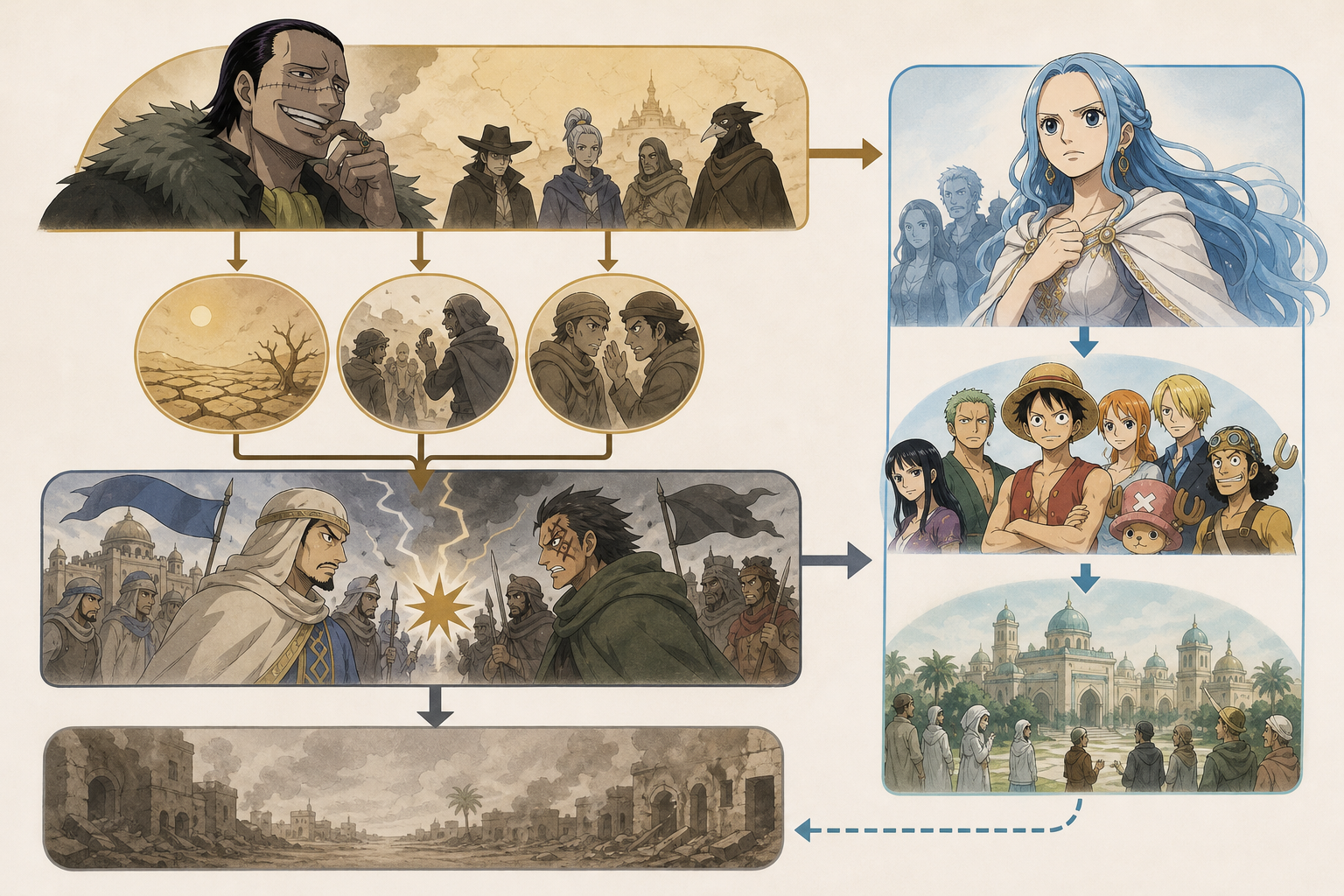
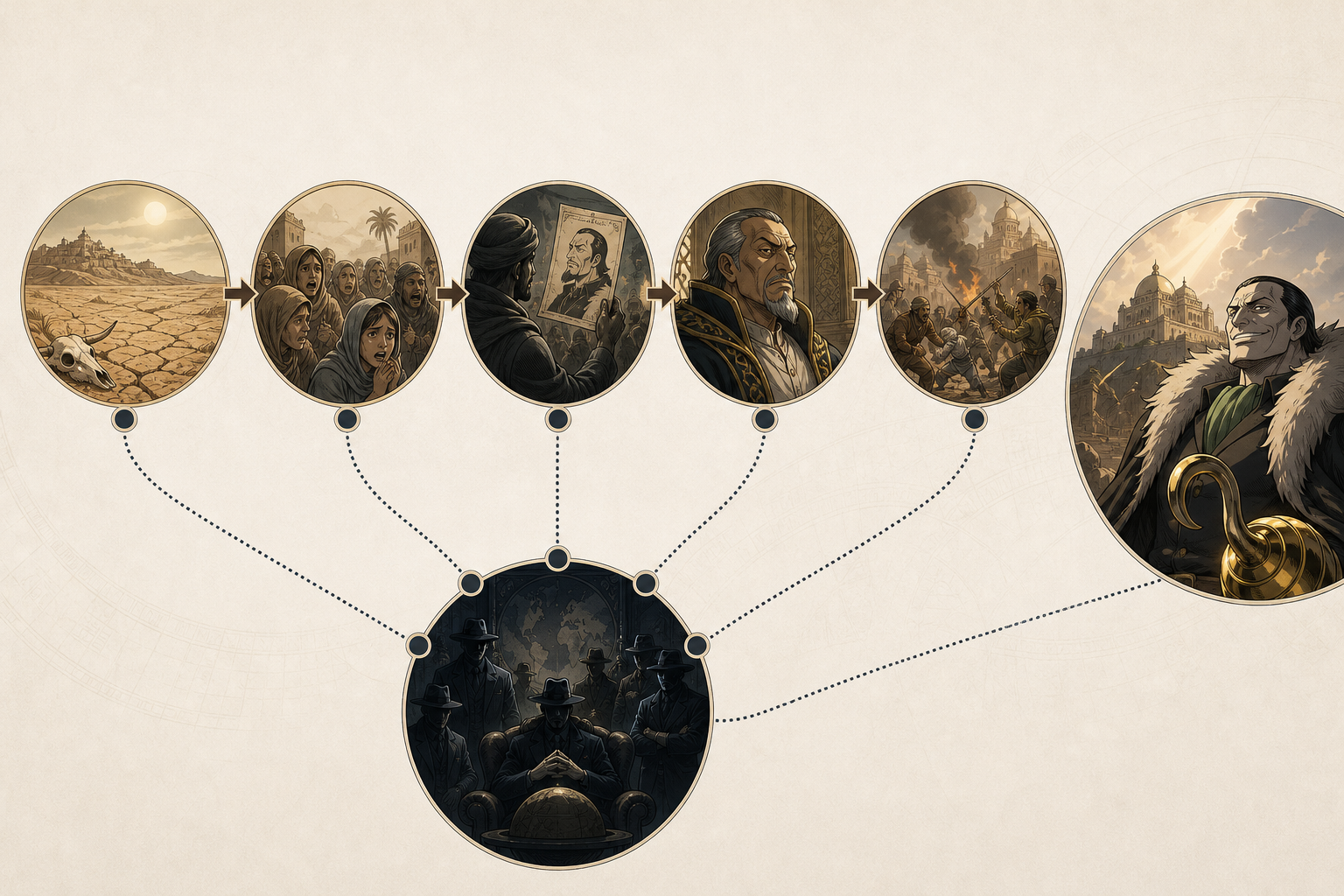
Crocodile, secretly Mr. 0 of Baroque Works, aims to seize control of Alabasta through Operation Utopia. He fuels distrust between the royal army and the rebels, exploits the kingdom’s drought, and lets both sides believe the other is responsible. His end goal is power, including access to the ancient weapon Pluton said to be connected to Alabasta.

Diagram of Crocodile’s manipulation of Alabasta’s civil conflict
The conflict is engineered to make Alabasta easier for Crocodile to control.

For a fuller event and battle guide, read Alabasta Arc One Piece Explained.

It is not simply a war between two sides

The conflict can look like a simple clash between a monarchy and a rebellion. The tragedy is that Crocodile engineers the conditions that make the clash possible. People who believe they are defending their homes or seeking justice are being used as pieces in his scheme.

That is exactly the kind of cruelty the Straw Hats cannot ignore. Crocodile does not only threaten Vivi or challenge Luffy. He treats ordinary people as tools and turns fear into a weapon.

The crew is not interested in ruling Alabasta or choosing its politics. Their role is more direct: expose the person manufacturing the disaster, protect their friend, and help prevent the catastrophe from becoming irreversible.

Why defeating Crocodile is not enough on its own

Even after Crocodile is confronted, Alabasta still faces a ticking clock. Rumors, anger, and armed conflict have a momentum of their own. The crew therefore cannot solve the problem with one fight alone.

That pressure gives the arc its moral weight. Luffy’s battle with Crocodile matters, but so do Vivi’s efforts to make herself heard and stop the fighting. The Straw Hats create an opening; Vivi remains the person trying to reach her people.

An official recap of the story also highlights the crew’s willingness to keep moving through danger, including their escape from the Marine blockade with Bon Clay’s help (Bandai Namco Entertainment).

What Alabasta reveals about Straw Hat ethics

Alabasta is an early, clear statement of the Straw Hats’ moral code. They are pirates, not formal heroes, and they do not take on every injustice they hear about. But several triggers reliably move them from concern to action.

A chosen friend is worth the risk

The crew does not protect Vivi because she is a princess. In fact, her rank means little to them. They protect her because she has shared danger with them and earned their trust.

That is the key answer to why the crew helps in Alabasta: friendship is not a light promise in this crew. Once someone is accepted as one of their own, inconvenience and danger stop being reasons to leave.

They reject power built on manipulation

Crocodile’s strength is not just his Devil Fruit. It is his ability to hide behind a public image while he creates misery in private. The Straw Hats have little patience for that kind of power.

They do not need a political theory to recognize the problem. They see a powerful person trapping civilians in a conflict they did not choose, and they push back. For a closer look at Mr. 0’s place in the story, see Crocodile One Piece Explained.

Helping is not the same as taking over

The Straw Hats help Vivi, but they do not replace her. She has knowledge of her country, ties to its people, and a responsibility she chooses to carry. Luffy cannot speak to the citizens of Alabasta in her place, and he does not try.

That division of roles is one reason the ending works. The crew fights the forces blocking Vivi’s path. Vivi faces her people and works for peace herself. It is support without possession.

The scenes that make Vivi a non-negotiable friend

The arc has many fights, but its most important turns are emotional decisions. These are the moments to watch when revisiting the story.

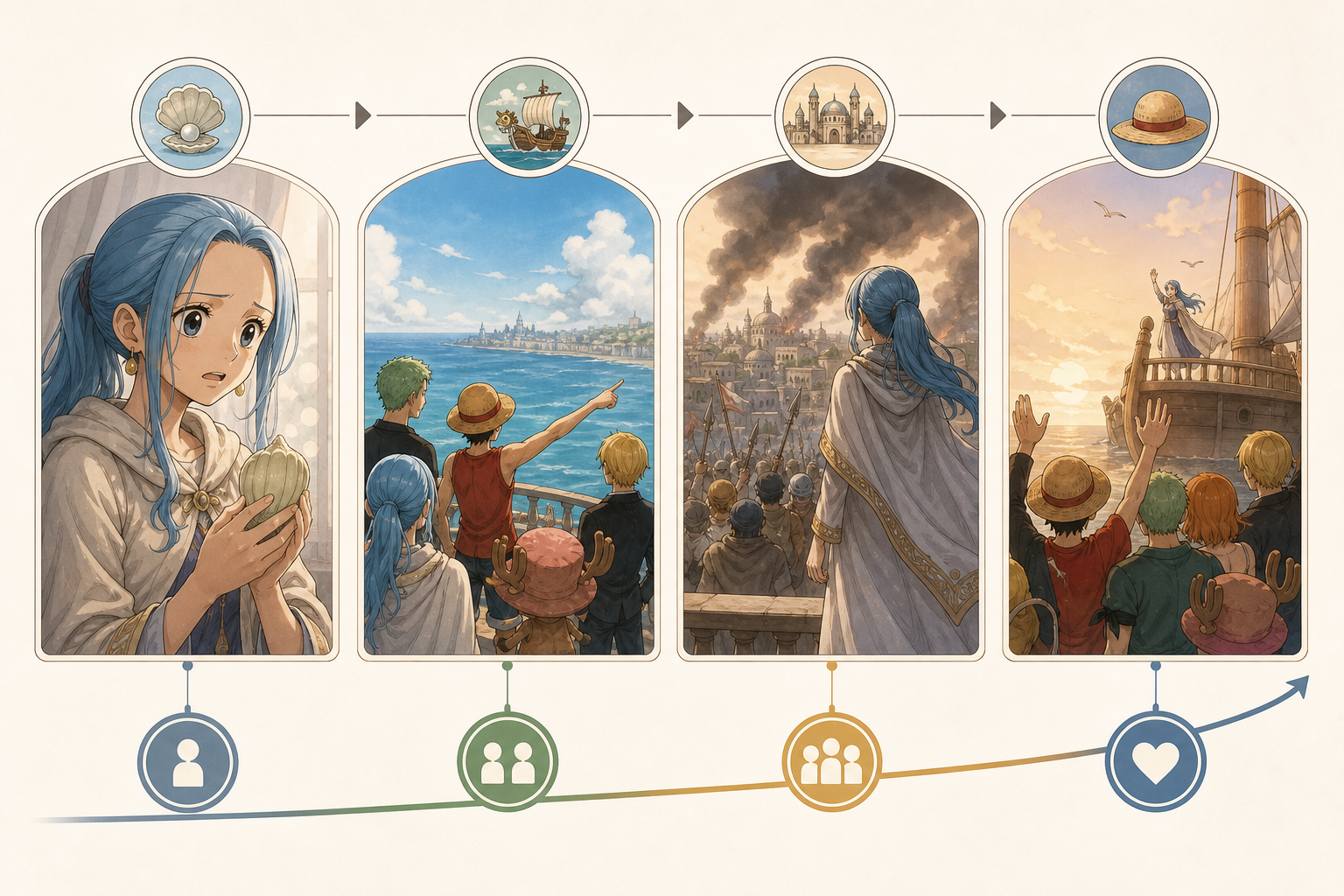
Four key stages in Vivi becoming a trusted Straw Hat friend
Alabasta becomes personal through repeated choices, not one request for help.

Vivi drops the disguise and shows the cost of her mission

Once the Straw Hats understand that Miss Wednesday is Vivi, they also understand how much she has risked alone. Her royal status does not erase her fear or make the task easy. It makes the stakes more painful: she is watching her own country slide toward violence.

The crew responds to that sincerity, not to royal authority.

Luffy refuses to let her carry everything alone

Vivi often tries to bear the full responsibility for Alabasta. Luffy pushes against that instinct. His response is not a detailed plan for governing a country. It is a blunt refusal to let a friend suffer alone while he can act.

That is a recurring Straw Hat pattern: when someone insists they must handle a crisis by themselves, the crew challenges the isolation before it challenges the enemy.

The crew accepts the cost of staying

Traveling to Alabasta brings heat from Baroque Works and the Marines, as well as the hazards of the Grand Line. The crew has chances to treat Vivi as a temporary passenger and move on. Instead, they keep choosing the harder route.

Their loyalty is practical, not ceremonial. They show it by continuing the journey, sharing the danger, and fighting for the chance that Vivi can reach her people.

The farewell proves the friendship is not conditional

The farewell is powerful because Alabasta has already established the rule: friendship does not require ownership. Vivi belongs with her people, while the Straw Hats must continue their voyage. Separation does not undo what they chose together.

That idea becomes especially important when considering other characters whose loyalty is unclear at first.

Nami, Robin, and Bon Clay: three useful contrasts

Questions about betrayal and shifting alliances often get folded into Alabasta discussions. These characters show three different forms of loyalty under pressure.

Nami did not betray Luffy in Alabasta

When fans ask why Nami “betrayed” Luffy, they are usually referring to the Arlong Park story, not Alabasta. Nami works under Arlong because she is trying to protect Cocoyasi Village. Her secrecy is a survival strategy under coercion.

Vivi’s situation is different in scale but similar in one key way: both women try to carry a crushing responsibility alone. The Straw Hats’ response in both stories is to look past the apparent betrayal or distance and see the pressure underneath.

Robin helps Luffy, but her motives stay guarded

Nico Robin, then known as Miss All Sunday, is one of the arc’s deliberate mysteries. She opposes Crocodile at key moments, including helping Luffy survive, but she does not suddenly become an open Straw Hat ally. Her actions are tied to her own goals, especially the poneglyph in Alabasta, and the story keeps her motives partly hidden.

That uncertainty is what makes her later place in the crew meaningful. Alabasta begins the question of whether an enemy can become someone worth trusting. Explore that later journey in Nico Robin One Piece Explained.

Bon Clay shows that honor can cross enemy lines

Mr. 2 Bon Clay begins as an opponent, but he also follows his own code. His actions complicate the simple labels of friend and enemy. In an arc driven by deception, he stands out because a promise can still mean something to him.

Together, Vivi, Robin, and Bon Clay show that One Piece treats loyalty as a choice shaped by pressure, values, and action—not as a fixed team label.

Why Alabasta remains important in One Piece

Alabasta is one of the first arcs to show that the Straw Hats can affect a world much larger than their ship. It expands the story beyond island adventures without losing the personal reason the crew gets involved.

The formula is simple but powerful: a friend is in danger, a corrupt force is hurting ordinary people, and the crew refuses to stand aside. Yet the arc also avoids making the Straw Hats the sole owners of the victory. Vivi’s voice, the citizens’ choices, and the truth behind the conflict all matter.

That is why Alabasta is more than a Crocodile fight or a royal rescue plot. It is the point where the Straw Hats’ chosen-family ethics meet a national crisis—and where their willingness to help becomes impossible to mistake.

Quick reference: chapters, episodes, and common questions

Which chapters and episodes cover Alabasta?

The Alabasta Arc is commonly listed as manga chapters 155–217 and anime episodes 92–130. Lists sometimes differ because fans and platforms may include earlier Baroque Works setup arcs in the wider Alabasta Saga. The One Piece Wiki arc guide is a useful cross-check, though streaming services may group episodes differently.

Is Alabasta one of the most disliked One Piece arcs?

There is no single answer because fan opinion changes by platform, pacing preference, and whether someone watches the anime or reads the manga. Alabasta is often discussed as a major early arc rather than a consensus “most disliked” one. Its long-term importance comes from Vivi, Crocodile, Robin, Baroque Works, and the way it broadens the world’s political stakes.

How should a live-action version handle Alabasta?

Any adaptation would need to preserve the core relationship, not just the desert setting or major fights: Vivi’s agency, Crocodile’s manipulation of public fear, and the crew’s decision to treat her problem as their own. Specific adaptation choices should not be assumed until they are officially announced.

What Makes Alabasta Feel Like a Political Thriller?

Alabasta feels like a political thriller because the arc’s tension runs through institutions, rumors, and public mood—not just who hits harder. If you’re sea…

Alabasta feels like a political thriller because Crocodile’s real weapon is not his Devil Fruit. It is a country-wide crisis built on drought, fear, false evidence, and collapsing trust.

So, what makes Alabasta feel like a political thriller rather than a standard One Piece adventure? The Straw Hats can win fights, but defeating Crocodile alone cannot stop the royal army and rebel army from killing each other. To save the kingdom, the truth has to reach people before the crisis becomes irreversible.

That gives the arc a different kind of tension. Fights matter, but so do rumors, public image, deadlines, and who controls the facts. For a full event-by-event guide, see Alabasta Arc One Piece Explained: Story, Battles & Why It Matters.

Why Alabasta Turns One Piece Political

Alabasta is political because it shows a whole society under pressure. The drought affects daily life. People need water, answers, and someone to blame. King Cobra has authority, but authority means little when the public no longer trusts him.

Crocodile understands that weakness. He does not take over as an obvious invader. Instead, he lets the kingdom blame itself while Baroque Works pushes each side toward violence.

The arc makes one crucial distinction:

  • Winning a fight removes a threat in front of you.
  • Ending a political crisis means changing what frightened people believe and do.

Crocodile can lose a fight while the civil war continues. That is why the climax has so much pressure. Alabasta will not wait for Luffy to finish a duel.

The story is not a realistic political drama with no room for pirates, comedy, or superpowers. It uses those elements to make a political conflict easy to feel. A drought becomes personal when people cannot get water. A rumor becomes dangerous when it sends an army marching. A trusted hero becomes frightening when viewers know that trust was part of the trap.

The Political-Thriller Checklist

Political thrillers create suspense through systems as well as villains. Someone must work out who is shaping events, what ordinary people have been told, and whether the truth can arrive before violence does.

Diagram of how Crocodile turns drought and misinformation into civil conflict in Alabasta.
Crocodile’s plan works because each stage makes the next lie easier to believe.

Alabasta checks nearly every box:

Plot device How it works in Alabasta Why it matters
Scarcity The drought turns water into a source of fear and blame. People in crisis need answers quickly.
Propaganda Rumors and staged events make the royal family look guilty. Citizens act on a false story.
Public legitimacy Crocodile has a trusted public image. The person behind the crisis can appear to be its savior.
Covert operations Baroque Works uses code names and separate agents. It is hard to see the full plan at first.
Competing groups The crown, rebels, Marines, and civilians know different things. No single group can fix the crisis alone.
Ticking clock Civil war and the bomb plot create urgent deadlines. Even a late victory may cost lives.
Civilian stakes The people of Alabasta bear the cost of escalation. The conflict matters beyond the main cast.

This is the arc’s real engine. Viewers are not only asking, “Who will win?” They are asking, “Can the truth reach people before they act on a lie?”

That framework also works beyond Alabasta. When another One Piece story introduces a public crisis, look for the same ingredients: a real grievance, incomplete information, a figure with official cover, and someone who benefits from a rushed response.

Drought, Distrust, and Partial Information

The desert setting is more than atmosphere. The drought makes ordinary life harder, which makes the kingdom easier to destabilize.

When people are thirsty and scared, they do not need to be foolish to believe the worst about their leaders. They have real reasons to be angry. Their pain is genuine. Crocodile’s trick is to give that pain a false cause.

That makes the rebellion tragic. The rebels are not mindless crowds. They believe the government has failed them. Their conclusion is wrong, but it grows from suffering that cannot be ignored.

Why scarcity works so well

Scarcity creates urgency before the final battlefield. A resource crisis changes how every rumor lands. If life feels stable, a claim about government failure may invite skepticism. If people are already struggling, the same claim can feel like proof of what they see every day.

Crocodile does not need every citizen to be gullible. He only needs the lie to feel believable enough that anger can do the rest. The scheme succeeds because it attaches itself to a real problem.

Everyone sees only part of the truth

Most major groups in Alabasta have limited information:

  • The royal government is trying to hold the kingdom together.
  • The rebels believe peaceful options have failed.
  • Civilians react to the stories around them.
  • The Marines have their own duties and incomplete knowledge.
  • Baroque Works benefits whenever confusion grows.

A sincere character can make a terrible choice when they have been given bad information. On a rewatch, ask two questions: Who benefits if people panic? And who benefits if people wait? In Alabasta, both questions lead back to Crocodile’s plan.

Crocodile Manufactures Trust

Crocodile is dangerous because he understands reputation as well as power.

He is not an enemy hiding in a distant fortress from the start. His public identity gives him trust. That lets him work in the open while Baroque Works works in secret.

A hated villain has to overpower resistance. A respected villain can make resistance look unreasonable. Warnings about Crocodile sound less convincing when he already looks like a hero.

For a closer look at his role and Operation Utopia, read Crocodile One Piece Explained: Powers, Role & Season 2.

Power needs legitimacy

Crocodile does not merely seek power; he seeks legitimacy first. He builds a public identity that makes people ready to see him as a protector. Then he uses that trust as cover for a scheme that harms the country.

The audience knows his image is false, while many people in Alabasta have no reason to doubt it. This creates dramatic irony: viewers can see the danger before the people affected by it can.

His plan attacks two things at once. It weakens confidence in King Cobra and makes Crocodile look dependable by comparison. The problem is not only that the truth is hidden. A more convenient story has already taken its place.

Official status is not accountability

Crocodile’s Warlord status adds another layer. His title gives him public and institutional credibility, even though it does not prove that he serves the public interest.

Alabasta uses this to ask a simple question: what is the gap between power and the appearance of power? A title, uniform, or official role can shape public opinion long before people know the truth. That idea becomes more important as One Piece explores law and authority in later stories. For a wider look at that theme, see What Is Absolute Justice In One Piece? – In Depth!.

Baroque Works Turns Conflict Into a Network

Baroque Works is more than a lineup of opponents for the Straw Hats. It is a covert network designed to worsen a national crisis.

Its agents use code names and separate assignments. That keeps the full plan hidden. One person can carry out an order without knowing every detail, while Crocodile stays distant from the damage.

This is why raw strength is not enough. Defeating one agent does not reveal who controls the next move.

The Straw Hats enter Alabasta as outsiders. They have to learn the country’s conflict while moving through it. At first, separate incidents can seem random. Then the arc shows how carefully they fit together. That is a thriller structure: the heroes are solving a case while trying to survive it.

Infiltration makes the kingdom feel unsafe

A straightforward invasion would make the enemy easy to identify. Baroque Works makes danger harder to locate because its work is spread across the country. The network can influence events without looking like a single occupying force.

The organization also turns information into a weapon. Code names hide responsibility, and separate jobs make it hard for any one character to see the whole picture. The protagonists are always catching up to a plan already in motion.

Vivi Makes the Crisis Personal

Vivi gives Alabasta its emotional center. Her goal is not simply to defeat Crocodile. She wants to stop her country from destroying itself.

That puts her in a different role from a typical action hero. She has to persuade people, reach the right people at the right time, and prevent violence from becoming impossible to stop.

The rebels are suffering people, not disposable obstacles. The royal forces want to protect the kingdom, but they can still make the crisis worse. Vivi needs both sides to pause long enough to hear the truth.

Negotiation is not a side quest

In a simpler battle arc, defeating the boss could be the whole solution. Alabasta refuses that shortcut. Vivi’s attempts to communicate and de-escalate are not interruptions between action scenes. They are the actions needed to save the country.

Luffy’s determination matters, and the crew’s battles against Baroque Works matter. But Vivi’s desperate effort to stop people from treating each other as enemies is just as central. The story needs fighters, messengers, witnesses, and people willing to listen.

Truth moves slower than fear

Alabasta makes a hard point: having the truth does not mean people will accept it.

The source has to seem credible. The message has to arrive in time. People must also be willing to change their minds after choosing a side. Fear moves faster. Once violence starts, every loss becomes another reason to keep fighting.

That is why Vivi’s role is the arc’s genre engine. Every minute spent chasing Crocodile’s scheme is also a minute in which people may make choices they cannot easily undo.

Why Beating Crocodile Does Not End the Civil War

The arc’s best structural choice is its separation of tactical success from political success.

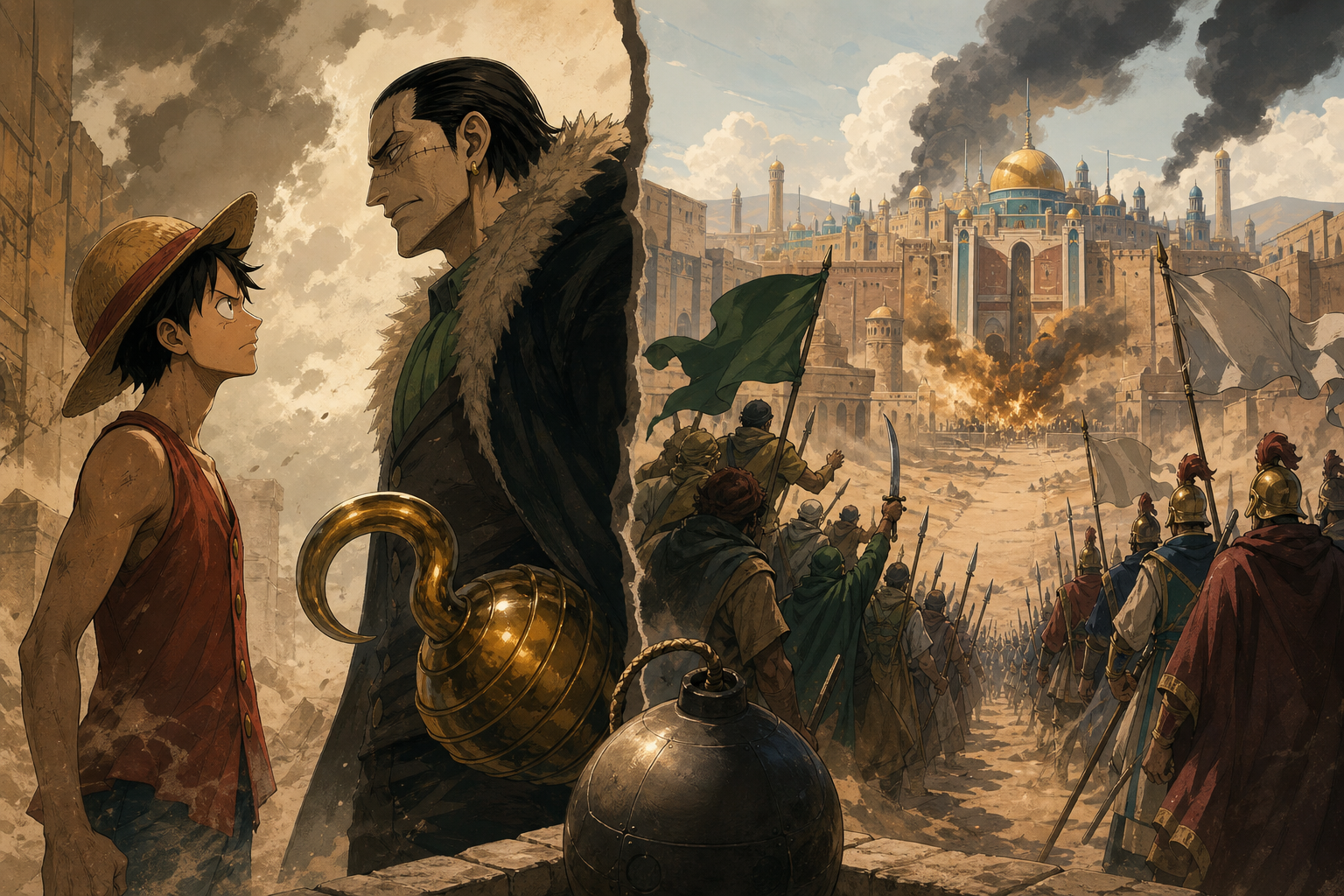
Luffy fights Crocodile while opposing forces and civilians face danger in Alubarna.
Alabasta’s finale runs on several urgent conflicts at once.

The Straw Hats can defeat Baroque Works officers. They can expose Crocodile’s role. Luffy can beat Crocodile. None of that automatically stops two armies already moving toward each other.

The conflict has momentum of its own. People have suffered losses. Leaders have made promises. Backing down can feel dangerous, shameful, or impossible.

The bomb plot makes this even clearer. It is not just one more obstacle before the ending. It is a mass-casualty threat that could make the crisis irreversible, no matter who wins the major fights.

Several deadlines run at once:

  • The rebel army is moving toward battle.
  • The royal forces are preparing to respond.
  • Baroque Works is pushing every side toward escalation.
  • The bomb threatens everyone in the city.

That is why the finale feels frantic. Some characters fight, some search, and some try to communicate. They are all trying to save Alabasta in different ways.

A real victory changes conditions

Removing the architect of a crisis is necessary, but it is not always enough. The people inside the crisis still have to learn what happened, survive the immediate danger, and stop treating each other as enemies.

This makes the resolution more mature than “the strongest person wins.” It does not lessen Luffy’s final fight. It shows why that fight matters only alongside everything else happening in the capital.

What Alabasta Says About One Piece Politics

Alabasta is one early reason people call One Piece political. The series does not only ask whether heroes can beat villains. It also asks how power affects ordinary people.

The politics are shown through consequences rather than long speeches. Alabasta shows how a government can lose trust, how an official title can shield a bad actor, and how civilians can be trapped between groups that do not know the whole truth.

It also teaches a useful habit for theory-minded fans. Separate these three things:

  1. What happened.
  2. What characters think happened.
  3. Who benefits from the gap between those versions.

That lens fits many later mysteries without requiring a major spoiler dump. When a character makes a frustrating choice, it is worth asking what they could reasonably know at that moment.

Was Alabasta inspired by real events?

It is best to be careful here. Without a direct statement from Eiichiro Oda, fan readings should not be treated as confirmed author intent.

Alabasta clearly uses ideas common in stories about political instability: a desert kingdom under stress, a basic resource in short supply, a ruler losing public trust, and a hidden figure who profits from conflict.

Fans have connected the arc to themes such as propaganda, anti-imperialism, and manufactured reasons for war. For example, this fan discussion of Arabasta, Skypiea, and anti-imperialism offers one interpretation. It is a fan source, not proof of Oda’s intent.

The clearest reading is in the text itself: Crocodile uses scarcity, fear, and misinformation to make a country turn against itself.

Later Arcs That Echo Alabasta’s Politics

Later One Piece arcs return to parts of Alabasta’s playbook, even when their settings and villains differ. This is a pattern-based comparison, not a claim that every later story repeats the same plot.

Manufactured crises

A recurring pattern is the engineered emergency. A public threat appears, anger is pushed toward a convenient target, and the person who gains most from the chaos stays hidden or acts helpful.

When a crisis seems unusually useful to someone powerful, Alabasta is a good reference point. It trains viewers to look past the loudest explanation and ask who shaped the conditions around it.

Official-looking power and information warfare

Alabasta also teaches viewers not to treat titles as proof of good intent. Later stories often explore people and groups that claim to represent law, safety, or order while causing harm.

The strongest echo is often the fight over public narratives: rumors, hidden history, selective evidence, and characters struggling to make the truth heard. If you enjoy sorting a popular claim from the story around it, One Piece Sabo kills Burgess – What really happened? takes a similar theory-focused approach.

The key question is not whether someone is official. It is what their status allows them to do, and who can challenge them.

Manga vs. Anime: Does Alabasta Feel Different?

The core political plot is the same in both versions, but the experience can differ.

In the manga

The manga can make the chain of cause and effect easier to track. Readers can move quickly from a rumor to its result, or from a Baroque Works move to the response it triggers. It is also easy to pause and reread a scene to check who knows what.

For readers who value momentum, that can sharpen the thriller feeling. The page-to-page pace makes the arc’s several problems feel tightly connected.

In the anime

The anime adds voice acting, music, and extended reaction shots. At its best, those elements make the kingdom-wide stakes feel immediate and emotional.

Some viewers may find the added runtime slows the urgency, especially during travel or repeated context scenes. If that happens, switching to the manga for part of the arc is a reasonable option. The manga can clarify the plot, while the anime adds performances and music to major moments.

Choose the manga if you want to follow the political machinery as directly as possible. Choose the anime if atmosphere, performances, and big emotional beats are your priority. Either version preserves the answer to what makes Alabasta feel like a political thriller: the outcome depends on more than who wins a fight.

Should You Skip Alabasta?

If you care about the larger One Piece story, it is better not to skip Alabasta.

The arc develops Vivi, introduces Robin in a major role, explores the Warlord system, and gives the series one of its first full nation-level crises. It also establishes patterns that matter later: public distrust, hidden networks, and the gap between official stories and reality.

A recap can give you the basic facts, but it cannot replace the build-up. The point is not only what Crocodile planned. It is watching distrust grow and seeing why a final fight cannot solve everything by itself.

If anime pacing is the problem, try one of these paths:

  • Read the manga for the most direct version of the plot.
  • Watch the anime, then use the manga when the pace feels slow.
  • Use a detailed recap as support, not as a replacement for key scenes.

There is also no single One Piece arc that every fan agrees is the most disliked. Opinions change by platform and format. Anime-only viewers may dislike slower pacing, while manga readers may feel differently. If an arc sounds divisive, sample a few chapters or episodes rather than relying on one ranking.

How to Rewatch Alabasta as a Political Thriller

Try these questions during a rewatch:

  • What do civilians believe right now?
  • What evidence led them there?
  • Who gains if the rebels and royal army fight?
  • What information does each group lack?
  • Is a character’s public image earned, made up, or both?
  • Which problems can a fight solve, and which require communication?
  • What must happen after the villain loses for the country to recover?

These questions make Alabasta’s construction easier to see. The arc is not only about uncovering Crocodile’s plan. It is about how that plan works because it uses fear, pain, and broken trust.

On a first watch, it is easy to focus on the final confrontation with Crocodile. On a revisit, the setup becomes more visible. Watch how often the story returns to what people think is happening, not only to what is actually happening. That distance between belief and reality is where the thriller tension lives.

Alabasta remains a key One Piece arc because it keeps the action, comedy, and emotion fans expect while adding a harder problem underneath: how do you save people when the truth alone may not be enough?

For another theory-focused look at secrets and wider conflicts in the One Piece world, continue with Baltigo One Piece – What really happened there?.

Alabasta Arc One Piece Explained: Story, Battles & Why It Matters

What the Alabasta Arc in One Piece actually is — and why it changes everything

The Alabasta Arc is where One Piece stops feeling like “island-of-the-week” and starts operating like a full-scale political thriller. A desert kingdom is sliding toward civil war. A Warlord of the Sea is pulling the strings. And the Straw Hats are racing to stop a conflict where “winning the fight” won’t matter if the country tears itself apart first.

If you’ve heard fans call Alabasta (sometimes spelled Arabasta in older translations) a turning point for the series, they’re right. This is the arc where Oda proves he can write geopolitical conflict — propaganda, institutional corruption, civilians caught between armies — and make it land emotionally. It’s not just a villain to punch. It’s an entire nation to save.

This guide walks through the full arc: what happens, why characters make the choices they do, and what it all means for the series going forward. Fight outcomes are covered clearly, so you can follow the stakes whether you’re watching for the first time or revisiting after years away.

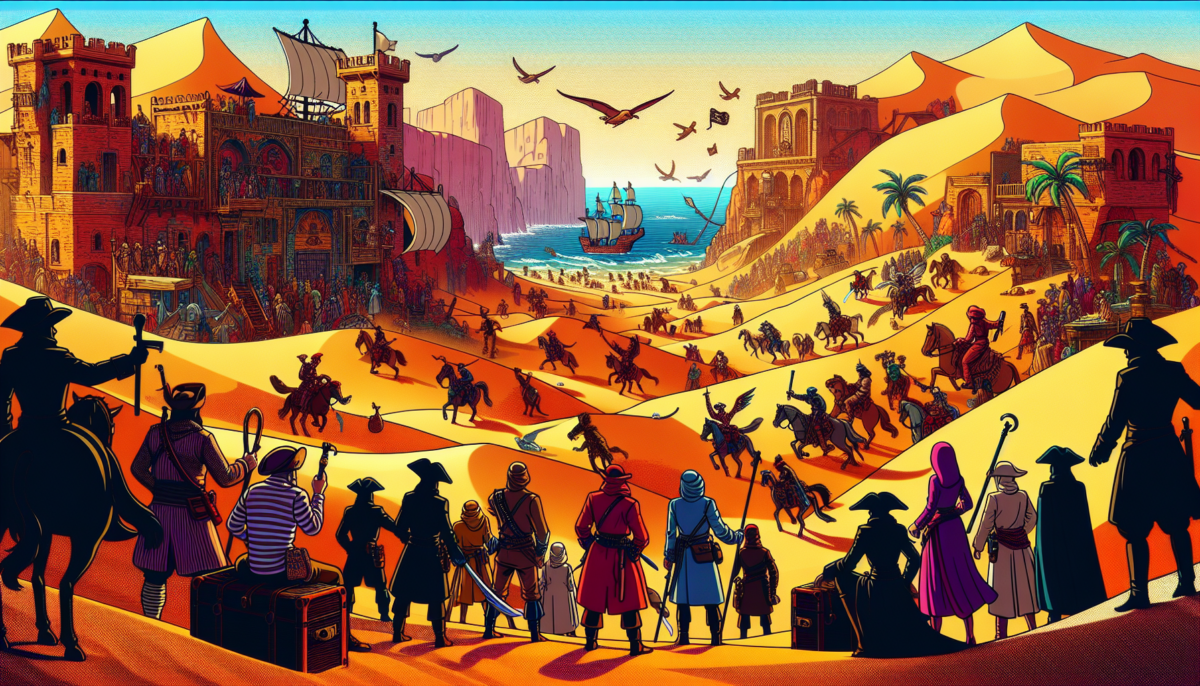
Desert battle scene with pirates near a fortified city, inspired by the Alabasta Arc in One Piece
Continue reading “Alabasta Arc One Piece Explained: Story, Battles & Why It Matters”