Which Streaming Service Fits Your One Piece Goals?

Picking which streaming service fits your one piece goals starts with your goal, not the logo. Use this quick decision tree, then confirm your region’s catal…

Which streaming service fits your One Piece goals? Start with what you want to do: begin at Episode 1, catch up, watch in English dub, try the live-action first, or find movies. Then check the actual title page in your country before you pay.

For most fans, the short answer is simple:

  • Choose Crunchyroll first if you want an anime-focused service and the strongest chance of a long main-series run.
  • Choose Netflix first if you already subscribe, want the live-action series in the same app, or your local catalog has the episodes you need.
  • Choose Hulu first if you are in the US and it is already part of your streaming bundle.

Catalogs, audio tracks, prices, and free trials can change. This guide avoids brittle episode totals and shows you how to confirm the details that matter. Some links on One Piece Theories may be affiliate links. They can help support the site at no extra cost to you.

Pick by your One Piece goal

I want to watch from Episode 1 to the current story

Start with Crunchyroll, then compare Netflix and Hulu in your region. IGN lists Crunchyroll, Netflix, and Hulu among the places where the anime can stream in its One Piece watch-order guide. That is a useful starting point, not a promise that every service has every episode where you live.
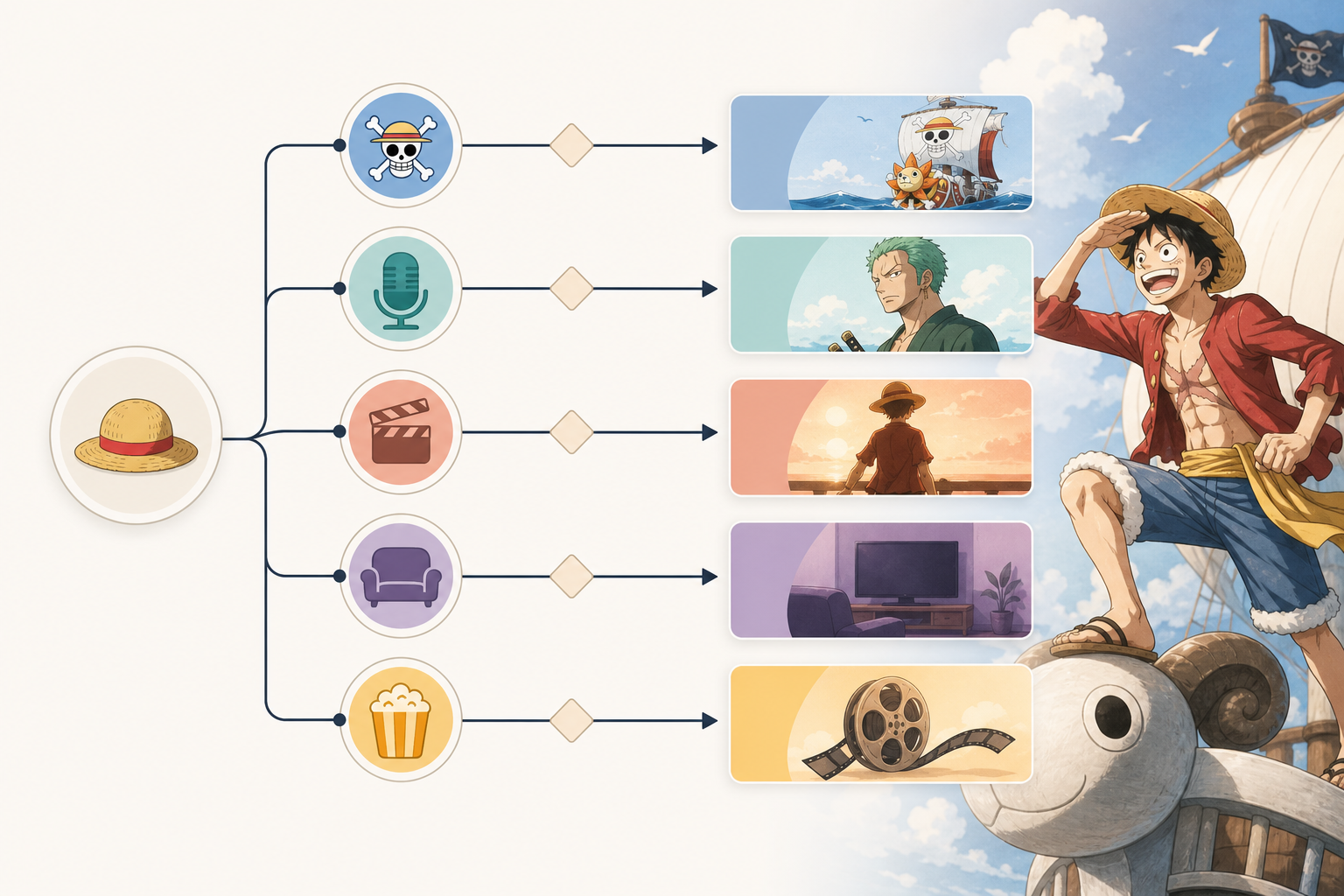
Decision tree for choosing a One Piece streaming service by viewing goal.
Start with your viewing goal, then confirm the catalog in your region.

Your key check is the series page: look at season groupings, the newest episode shown, and whether the earliest episodes are present. A service can have a large collection but still miss the section you want next.

I only want English dub

Do not rely on a service-wide label such as “dubbed anime.” Open an early episode, a middle season, and a recent episode. Check the audio menu on each one.

Dub rights may differ from subtitle rights. A platform can carry Japanese audio with subtitles for a long stretch while English audio is available only for part of it. If dub is non-negotiable, this check matters more than the total number of seasons displayed.

I want the live-action series, then the anime

Netflix is the natural first app to inspect. Its ONE PIECE title page is the official place to see what Netflix offers on your account. The live-action adaptation and anime are separate titles, and anime availability still depends on your location.

If Netflix has only part of the anime where you live, you can watch the live-action there and use another official service for the anime. There is no need to force one subscription to do every job.

I want the lowest-cost legitimate option

First check services you already pay for. If Netflix or Hulu already carries the episodes you want, that may beat adding another monthly bill. If not, compare the current plans on the official service pages and subscribe only when you have time to watch.

A practical approach is to pick one arc-sized goal, finish it, and reassess before the next billing date. Avoid choosing a platform only because someone in another country says it has a complete catalog.

Crunchyroll vs Netflix vs Hulu for One Piece

The table below is a decision guide, not a fixed catalog report. “Varies” is useful here: regional licenses and language tracks can change, and the title page in your logged-in account is the final check.

Service Best starting point for What to verify before subscribing Main trade-off
Crunchyroll Fans who want an anime-first experience and a long-running series Earliest and newest episodes, English dub coverage, movie availability, supported devices Catalog and audio choices can differ by region
Netflix Live-action-first viewers and households already using Netflix Which anime seasons are present, audio tracks, and whether the series fits your watch plan The anime catalog may be partial in some countries
Hulu US viewers who already have Hulu or a related bundle Season coverage, audio choices, current plan terms, and whether the episodes you need are included It is mainly useful when it fits your existing subscription setup

Hulu has an official One Piece series page, while Netflix has its own official title page. Use those pages as a first check, then confirm the episode list after you sign in. IGN’s guide also notes that One Piece movies may be available through Crunchyroll, but movie rights can move separately from the main series.

What “most complete” really means

A complete catalog is not one thing. For your watch plan, it may mean:

  1. The anime starts at Episode 1.
  2. The service reaches the arc you want to watch.
  3. Your preferred Japanese audio, English dub, or subtitle option is present.
  4. Movies and specials are available if you care about them.
  5. New episodes appear soon enough for your catch-up goal.

An anime-focused service may be the better first check for the main series. But Netflix can be the better practical choice if it already has your needed episodes, your preferred language track, and the live-action series in one place. The best service is the one that clears your own checklist.

How to check your regional catalog before paying

A region lock means a streaming service offers different content in different countries. It happens because rights are licensed by territory. That is why a friend can see a season, dub, or movie that does not appear on your account.
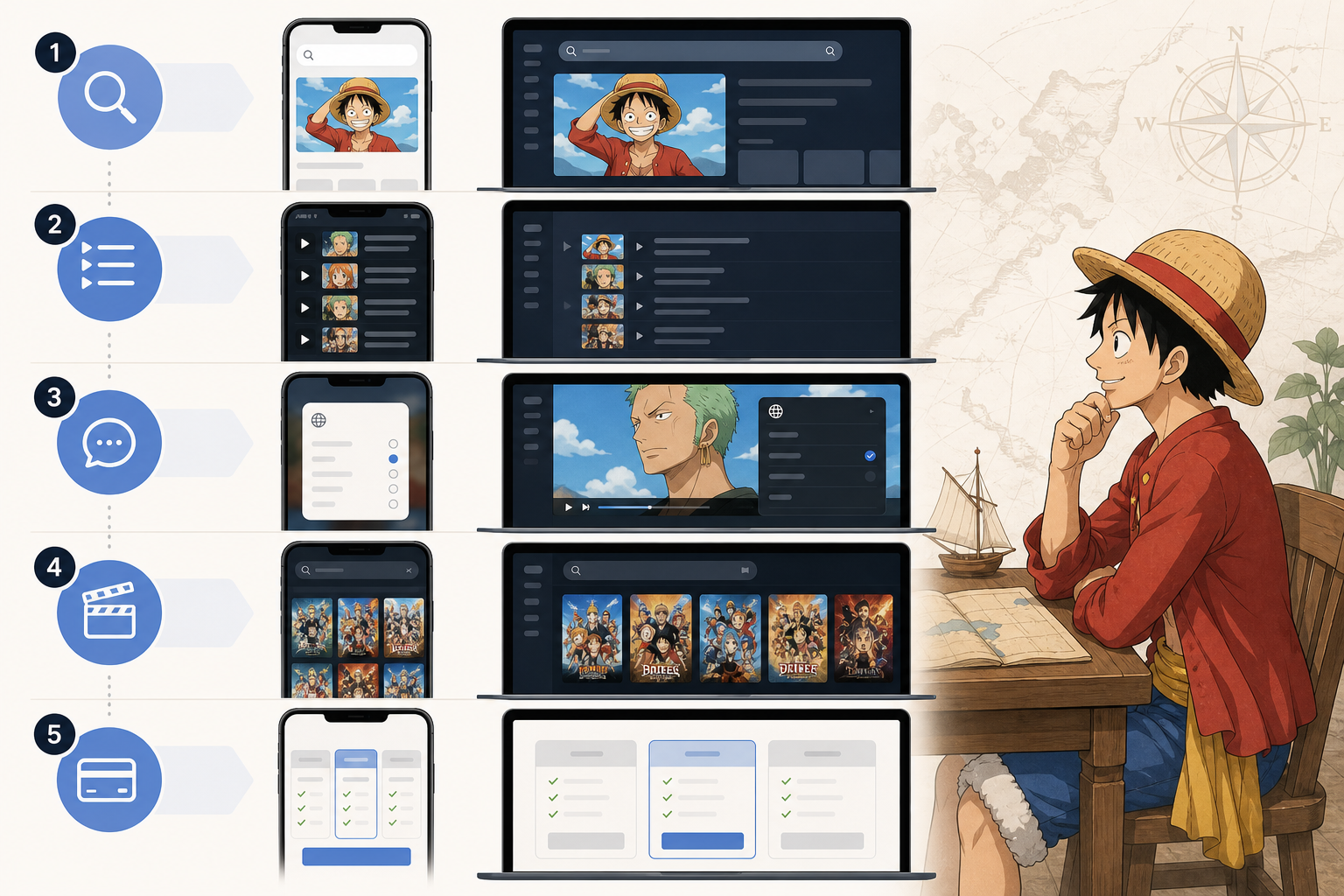
Five steps for checking a streaming catalog before subscribing.
Verify episodes and language tracks in your own account before you commit.

Use this five-minute check before starting a subscription:

  1. Search for One Piece in the service while logged in.
  2. Open the main anime series page, not only a search preview.
  3. Check the first available episode, the latest available episode, and the season list.
  4. Open the audio and subtitle menu on more than one episode.
  5. Search separately for any movie or special you want to watch.

If the service offers a trial, do this before you build a full watch plan around it. Take note of the last episode available and the language options you need. This is more reliable than a generic “where to stream” list, especially when licensing changes.

What happens when you travel

When you travel, a service may show the catalog for your new location. Downloads can also have their own limits or check-in rules. If you expect to watch away from home, read the provider’s current download and travel terms before you rely on offline episodes.

Should you use a VPN?

Some viewers use VPNs to try to access another country’s library. That can violate a provider’s terms and may lead to playback errors. The safer route is to compare the official services available where you are and choose the one that covers your next viewing goal.

Movies, specials, and a spoiler-safe watch plan

One Piece movies, TV specials, and OVAs can be harder to find than the main anime. They are often licensed separately, and they are not always needed to follow the central story. If your priority is the canon narrative, focus on the main episode run first.

If you want movies too, search by the film’s individual title. Do not assume that a service with the anime also includes every film. IGN’s watch-order overview is a useful starting point for understanding the mix of anime, movies, and live action, but check the current service page before planning a movie night.

Keep theories fun without getting spoiled

Choosing a service is also about pacing. If you are new to the series, avoid searching character names or arc titles too far ahead. Autocomplete, thumbnails, and comment threads can reveal more than you want.

When you reach the time skip, our spoiler-conscious guide on how to follow One Piece time skip changes can help you track the shifts without turning your watch session into a research project. For a broad, low-pressure refresher on the appeal of the series, see why the One Piece anime is so famous.

A simple rule works well: finish an arc before reading theory discussions about it. You will still notice clues and themes, but you will have fewer surprise reveals thrown at you.

Service-by-service advice for common viewing styles

Crunchyroll: for an anime-first watch plan

Check Crunchyroll first if your main goal is a long anime binge, Japanese audio with subtitles, or an interface built around anime viewing. It is commonly treated as a key option for the franchise, and IGN includes it among the services that stream the anime.

Before you subscribe, verify three things: that the series begins where you need it to, that the current end point suits your goal, and that your preferred dub or subtitle track appears across the seasons you plan to watch. Also search for specific movies rather than assuming they sit with the show.

Netflix: for live-action-first and simple household viewing

Netflix is worth checking if the live-action adaptation brought you to One Piece or if you already use Netflix at home. Its official title page lets you see the listing available to your account, but that is not a universal catalog guarantee.

Netflix is the better fit when it has the arc you want and you value keeping the live-action and anime search in one familiar app. It is a weaker fit if its local anime listing stops before your planned catch-up point.

Hulu: for existing US subscribers

Hulu is worth a close look if you are in the US and it is already in your bundle. Its official series page confirms that it carries a One Piece listing. Still, check the episode list and language menu before making it your only platform for a long watch.

For a broader overview of legitimate viewing options, visit our where to watch the One Piece anime guide. Use it alongside the current listings in your own account, since availability can change.

Final checklist: which streaming service fits your One Piece goals?

Before you subscribe, answer these questions:

  • Do I need Japanese audio, English dub, or both?
  • Am I starting at Episode 1, continuing an arc, or catching up?
  • Do I care about movies and specials now, or only the main anime?
  • Is the series already included with a service I pay for?
  • Does the catalog in my country show the episodes and language tracks I need?

For the widest chance of a long anime run, begin by checking Crunchyroll. For a live-action-first route or a service you already use, inspect Netflix. For US bundle value, inspect Hulu. Then let the title page in your region make the final call.

That is which streaming service fits your One Piece goals in practice: not the service with the loudest claim, but the one that has your next episode, your preferred language, and a price that makes sense for your plan.
One Piece Live Action Changes Worth It? Honest Verdict

If you’re googling one piece live action changes worth it, you’re not just hunting a list of differences. You want a clear verdict on whether those differenc…

Are One Piece live action changes worth it? For newcomers, mostly yes. The series makes East Blue easier to follow by building a clear season-long Marine plot and trimming side stories. For manga and anime fans, the answer is more mixed: several changes improve TV pacing, but some cuts reduce the odd, patient emotional build that gives the original its heart.

This comparison covers Season 1 spoilers for the live-action series and early East Blue spoilers for the manga and anime. It judges changes by what they do for the story, not by whether every scene matches.

The short verdict: a strong entry point, not a replacement

The live-action series is a good way into One Piece if the length of the anime or manga feels daunting. It introduces Luffy’s dream, the Straw Hats’ goals, and the pirate-versus-Marine conflict with a clean forward drive.

It is not the full East Blue experience. The original has more room for detours, small acts of kindness, and the crew simply spending time together. Those scenes are not filler; they are often why later emotional moments work.

A fair rule for judging any adaptation is this: a plot change earns its place when it protects the emotional promise of the scene. In One Piece, that promise is usually freedom, loyalty, ridiculous courage, or the choice to protect someone weaker than yourself.

For a broader reaction to the season as a whole, read our One Piece live-action review. If you are new to the world itself, what the One Piece is and why it matters is a useful spoiler-light starting point.

How to judge the changes fairly

An eight-episode season cannot give every East Blue subplot the same time as the manga or anime. The live-action therefore combines scenes, removes some supporting characters, and moves information earlier. A comparison of the adaptations also notes that supporting roles and fights were substantially scaled down or changed (Popverse’s rundown of the differences).

Four-part framework for assessing live-action adaptation changes
Use the same test for every changed scene, not just the most famous cuts.

That does not automatically make a change good or bad. Use four questions instead:

Test What it asks Why it matters for newcomers
Clarity Is each character’s goal easy to understand? New viewers need firm footing in a very strange world.
Pacing Does the episode move without skipping the emotional setup? Speed helps only if the payoff still lands.
Character intent Do choices still feel true to Luffy, Nami, Zoro, Usopp, and Sanji? The crew matters more than exact plot order.
Themes and stakes Do freedom, dreams, sacrifice, and found family still carry weight? These are the core of One Piece.

The best changes score well in all four areas. The weaker ones usually gain pace by cutting the quiet beat that explains why anyone should care.

The biggest Season 1 changes, arc by arc

Romance Dawn: Garp becomes the season’s spine

The largest structural change is Garp. The live-action gives him a far bigger role from the opening and follows his pursuit of Luffy through the season. It also reveals his family connection to Luffy far earlier than the manga and anime do.

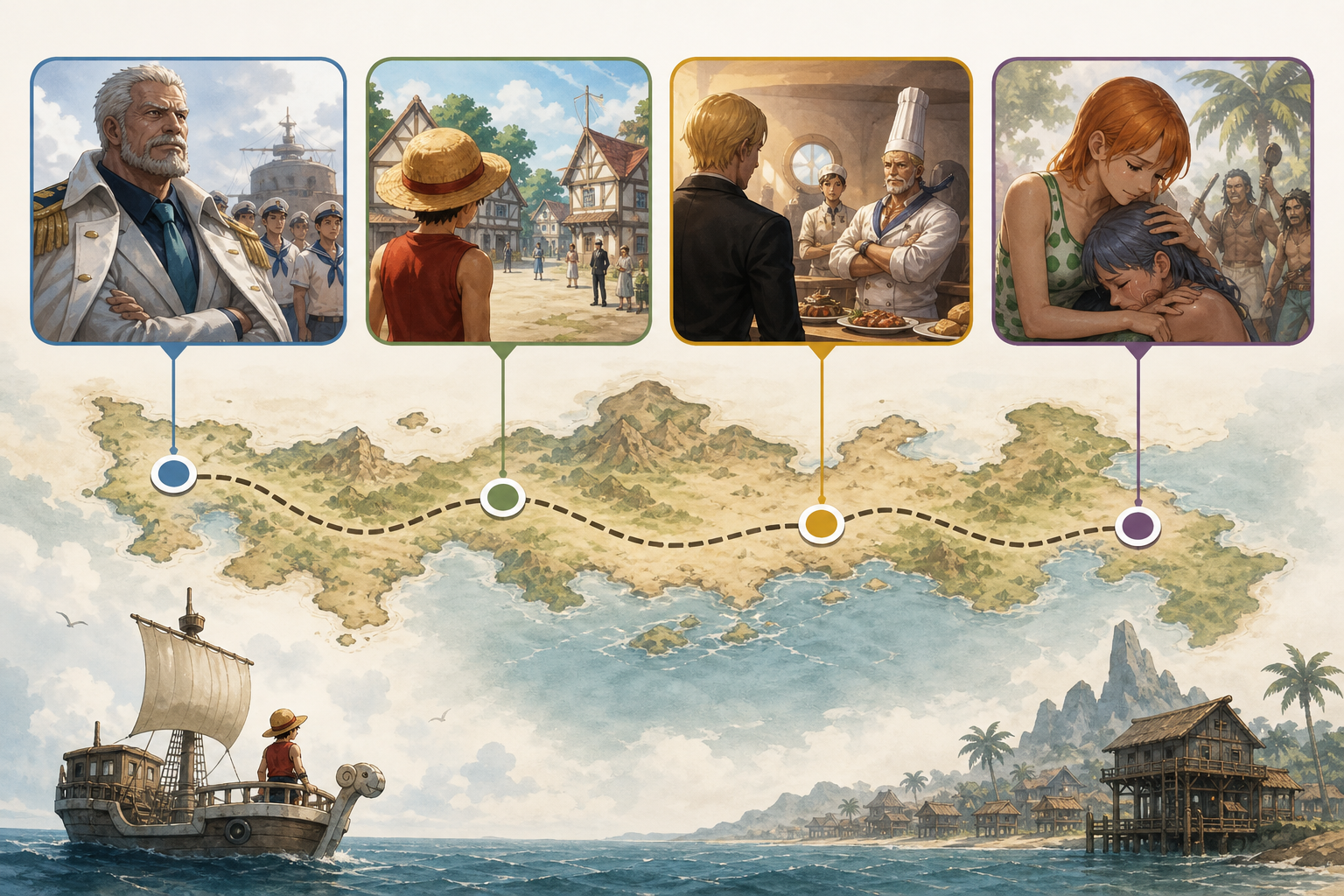
East Blue route showing major live-action adaptation changes
The live-action keeps the route but changes the amount of time spent at each stop.

For a first-time viewer, this works. Garp gives the season a continuing source of pressure between island adventures. He also makes the Marines feel like a real institution rather than a new obstacle every few episodes. IGN identifies Garp’s expanded presence as one of the adaptation’s major departures from the source material (IGN’s comparison of the biggest changes).

The trade-off is surprise. The original lets Luffy’s world expand before tying him so directly to a powerful Marine. The early reveal also shifts attention away from the Straw Hats during their first stretch as a crew.

Verdict: Worth it for structure and newcomer clarity; less satisfying if you value the original’s slower reveals.

The show also gives Zoro an early fight with Mr. 7, a Baroque Works agent. It is an efficient way to show that Zoro is already dangerous and to hint that larger criminal groups exist beyond East Blue. Still, it is more setup than East Blue needs. The scene works as a quick hook, not as a major emotional gain.

Orange Town: Buggy gets sharper, while the arc gets leaner

Orange Town keeps the main idea intact: Buggy is silly, cruel, and genuinely threatening. That balance is important. His powers and theatrical style could have felt disconnected from a more grounded format, but the live-action treats him as both a joke and a danger.

The arc loses some of the original’s wider town texture and supporting conflict. Yet it keeps a key emotional test in Chouchou, the dog protecting his owner’s store. That small story tells viewers who Luffy is: he takes another person’s grief seriously, even when the situation looks absurd.

The show also uses Buggy to feed information toward the larger Arlong plot. This makes the season feel connected, though it slightly reduces the sense that each island has its own distinct problem.

Verdict: A mostly successful compression. It preserves Luffy’s values and gives Buggy a clear live-action presence, even if the town feels less lived in.

Syrup Village: faster momentum, less room for Usopp

Syrup Village is where compression costs the most. Usopp still has the traits that matter—he lies, he panics, and he shows up when it counts—but the live-action has less time to let those traits clash before the crew accepts him.

The adaptation also changes the shape of Kuro’s plot and removes figures such as Jango and the Usopp Pirates. Moving much of the danger into Kaya’s mansion gives the episode a tighter suspense structure. It is easier to follow than a longer village battle, and it lets Kaya, Kuro, and Usopp share more direct conflict.

But the cut characters do have a cost. In the original, Usopp’s local ties help show that his tall tales grew from loneliness, imagination, and a real wish to protect people. The live-action gets to the point faster, but his place in the crew can feel less earned.

Merry’s fate also makes the Going Merry’s handover more bittersweet. The ship still represents a home the crew receives from someone who believes in them, which is the important part.

Verdict: Good episode-level pacing; a weaker version of Usopp’s gradual emotional case.

Baratie: Sanji’s values survive, but the world feels smaller

Baratie needs to do two things: prove that Zoro has a mountain to climb, and show why Sanji’s kindness is non-negotiable. The live-action succeeds with Mihawk. Zoro’s loss still establishes the gap between his dream and his current strength.

The larger departure is the absence of Don Krieg and Gin as the central conflict at Baratie. Their removal saves time and avoids adding another villain plot just before Arlong Park. It also changes the texture of Sanji’s introduction. In the original, hunger, debt, mercy, and violence collide through Gin and Krieg’s crew. That pressure makes Sanji’s belief that no hungry person should be turned away feel especially hard-won.

The live-action still gives Sanji a strong reason to leave with Luffy, and Zeff remains central to his dream. But the thematic test is less severe, so the message has less bite.

Verdict: Strong for Zoro and efficient for the season; thinner for the full moral weight of Sanji’s arc.

Arlong Park: Nami remains the heart, with a different rhythm

Arlong Park is the make-or-break section of East Blue because Nami’s pain must feel personal and communal at the same time. The live-action preserves the essential turn: Nami has carried an unbearable burden alone, and Luffy answers her request for help without demanding a perfect explanation.

Several details around Coco Village and its people are streamlined or reshaped. That makes Nami’s situation easier to grasp quickly, but it leaves less time for the village’s shared endurance to build. Genzo and Nojiko still matter, yet the village can feel less like a community with its own history than it does in the manga and anime.

The show also moves quickly through some of the buildup around Arlong’s control and the corrupt Marine connection. The result is clear and direct. The loss is dread: the original lets the audience sit longer with the sense that Nami cannot escape through effort alone.

Verdict: The emotional core lands, which matters most. The original builds more tension around it and gives the villagers greater weight.

Changes that help storytelling

The Marine and Garp plot gives the season a shape

East Blue was originally built as a chain of adventures. That format is part of its charm, but it can feel episodic to someone trying One Piece for the first time. The expanded Garp and Koby thread gives the live-action a TV-season spine: Luffy is gaining a crew while the Marines close in.

It also gives Koby more immediate purpose. He becomes a contrast to Luffy rather than simply a character who exits early. Both want to pursue a dream; they just choose opposite sides of the law.

Fewer moving parts make character goals clearer

The live-action is often good at stating what a character wants, then putting that want under pressure. Luffy wants the Pirate King title and a crew who choose him freely. Zoro wants to become the greatest swordsman. Nami wants freedom from Arlong. Sanji wants the All Blue.

That directness is helpful for newcomers, especially in a world with Devil Fruits, bounties, Marines, pirates, and many unfamiliar names. If the show convinces a viewer to care about those dreams, it has done its job.

Some powers translate best in simple, readable beats

Luffy’s stretching and Buggy’s separated body are hard effects to sell in live action. The series usually gives those powers room to read clearly instead of flooding every fight with constant movement. Results will vary by viewer, but the approach supports performance and jokes rather than treating every power as a visual-effects display.

If One Piece’s mix of comedy and sincerity is what you love most, our look at why the One Piece anime is so famous adds useful context for why this tonal balance is difficult to adapt.

Changes that weaken themes or stakes

Lost downtime can make the crew feel assembled too fast

The original spends time on meals, jokes, arguments, and minor acts of trust. These moments make the Straw Hats feel like a found family before the story asks them to risk everything for one another.

The live-action gets the key milestones, but it has fewer of these small bridges between them. As a result, a new viewer can understand why the crew forms while still missing some of the warmth that makes the group unforgettable.

Supporting characters are often the emotional proof

Chouchou, the Usopp Pirates, Gin, Johnny, and Yosaku do not all advance the main plot. They show what the main characters mean to ordinary people and to their pasts. When supporting roles disappear, the plot becomes cleaner, but the world can feel less crowded and less human.

This is why a scene-by-scene checklist is not enough. A cut may seem minor until you notice that it removed the person who made a hero’s kindness, fear, or loyalty visible.

Earlier answers can soften mystery

The early Garp reveal is the clearest example. It gives the season an immediate hook, but it trades away a later surprise. Other changes make villain plans and character motives more explicit sooner as well. That helps accessibility, yet One Piece often gains power from letting questions sit before it answers them.

So, are One Piece live action changes worth it for you?

If you are brand new: Yes. Start with the live-action if it feels approachable, then try the manga from Chapter 1 or the anime from Episode 1 if you want the fuller emotional build. Do not treat the show as a substitute; treat it as an invitation.

If you are anime-only: It is a fun alternate take. Expect different timing, fewer side characters, and a more connected season plot. Compare the moments you care about rather than counting every missing scene.

If you are manga-first: Go in ready to judge function over panel accuracy. The strongest deviations clarify motives or create a clean TV arc. The weakest ones cut the strange little moments that make East Blue feel alive.

Bottom line: The One Piece live action changes worth it question has a split answer. They are worth it when they make the story clearer without changing why a character fights. They are less successful when speed replaces the friendships, communities, and small kindnesses that give the big victories their force.

FAQ

Is the One Piece live-action faithful to the manga and anime?

It is faithful to the main character goals, major East Blue destinations, and emotional milestones, but it is not scene-for-scene faithful. Events are moved, merged, or removed to fit an eight-episode season.

What are the biggest Romance Dawn changes?

Garp has a much larger role throughout the season, his connection to Luffy is revealed much earlier, and Zoro receives an early confrontation with Mr. 7. These choices create a clearer continuing plot but reduce some later surprise.

Why does the live-action reveal Garp as Luffy’s grandfather earlier?

The early reveal helps make Garp’s pursuit personal and gives the season a recurring conflict outside the island villains. The trade-off is that the original’s delayed reveal has more shock value.

Does the live-action weaken Nami’s Arlong Park story?

Not at its core. Nami’s burden and Luffy’s response remain effective. The main loss is time: the manga and anime spend longer building the village’s pain and the sense that Nami has no way out.

What should I watch or read after Season 1?

For the fullest version of East Blue, start the manga at Chapter 1 or the anime at Episode 1. If Season 2 has you curious about what comes next, our Alabasta arc guide explains why the next major saga matters without treating the live-action as a one-to-one copy.

Best One Piece Mini Figures for Collectors: Shelf Guide

Finding the best one piece mini figures for collectors comes down to three things: knowing what “mini” really means, spotting legit releases, and choosing sc…

The best One Piece mini figures for collectors are not always the biggest or rarest releases. The right pick fits your shelf, matches the characters or arc you love, and comes from a seller you can trust. Start with a collection plan, then check the exact figure’s size, base, maker, and condition before you buy.

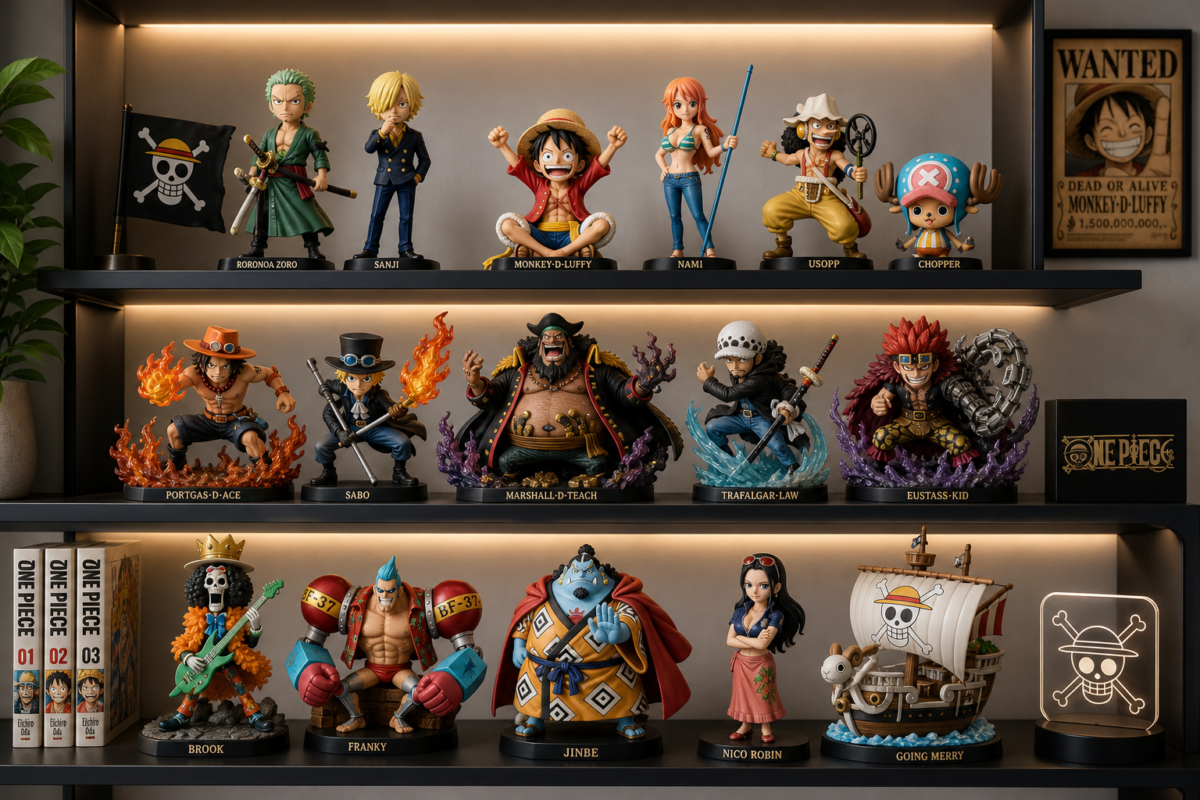
“Mini figure” is a broad hobby term. It can mean a chibi trading figure, a capsule toy, a blind-box pull, or a compact prize figure. Instead of relying on the word mini, use the listing’s stated height and base measurements to decide whether it will work in your display.

Start with a collection theme, not a random character list

A theme makes a small collection feel deliberate. It also helps you pass on purchases that are fun in the moment but do not fit your shelf.

Good starting themes include:

  • A Straw Hat lineup: An easy first goal because the crew looks great as a group.
  • One arc: Build a small Marineford, Wano, Dressrosa, or Egghead display.
  • One faction: Marines, the Worst Generation, the Seven Warlords, or a pirate crew.
  • One visual style: Keep chibi figures together, or collect one matching line across several characters.
  • A character-focused shelf: Choose one favorite and collect their different outfits, expressions, or moments.

For example, a Marines-versus-pirates shelf has more impact when the two sides face each other on separate risers. If Akainu and Aokiji are part of that plan, our Akainu vs. Aokiji guide can help inspire the story behind the matchup.

Best One Piece mini figure types to collect

Rather than chase a single SKU that may disappear from stores, look for figure types and established lines that suit the way you collect. Availability, finish, and size can vary by release, so always review the listing for the specific item.

World Collectable Figure-style releases: best for matching rows

Small, stylized figures in a consistent format are a strong choice for collectors who want a full crew, arc, or faction on one shelf. Their compact footprint makes it easier to display many characters without turning the shelf into a crowded pile.

These are especially useful for:

  • Building a Straw Hat crew in one visual style
  • Filling out an arc display with side characters
  • Creating a clean row of Marines, villains, or allies
  • Adding background characters around one larger centerpiece

The trade-off is detail. At a smaller size, paint apps and facial features may be simpler than on a larger figure. Look closely at product photos for the eyes, hairline, and any tiny emblems.

Compact prize figures: best for character variety

Prize-style figures often offer a wide selection of One Piece characters and outfits. Some are small enough for a mini-focused shelf, while others are better treated as mid-size display pieces. Check the dimensions instead of assuming they will match your existing minis.

They can be a smart route when you want recognizable poses and a broad cast without building a premium statue collection. Expect simpler sculpt details or visible seams on some releases. That is not automatically a sign of a fake; it is part of the trade-off at this end of the market.

For a sense of how broad the current product landscape can be, browse BigBadToyStore’s One Piece listings. Use it as a comparison tool, not a guarantee that a specific release is in stock or authentic from every seller.

Blind boxes and capsule figures: best for small spaces and trading

Blind boxes and gashapon-style figures are ideal for tight shelves, desk corners, and playful scene building. They can also be a low-commitment way to test whether you enjoy a stylized line.

They are less ideal if you need one exact character. Duplicates are part of the format, and buying several sealed boxes can cost more than purchasing a confirmed single from a trustworthy seller. For a core crew or a precise arc display, buy known singles when possible. Save blind boxes for extras, trades, or surprise additions.

Premium compact pieces: best for one focal point

A smaller figure can still be the center of a display if it has a detailed sculpt, expressive pose, or a strong base. Use one as an anchor, then place simpler minis around it. This approach gives a shelf depth without forcing every piece to be the same size.

If you are comparing a compact figure with a larger statue or action figure, remember the categories serve different goals. Action figures prioritize posing; statues prioritize a fixed sculpt and presence. Retailers such as Sideshow’s One Piece collection show how far the larger collectible end of the hobby can extend.

Plan shelf fit before you order

Shelf planning is what separates a satisfying collection from a row of figures that hide each other. Height matters, but base width, pose, and viewing angle matter just as much.

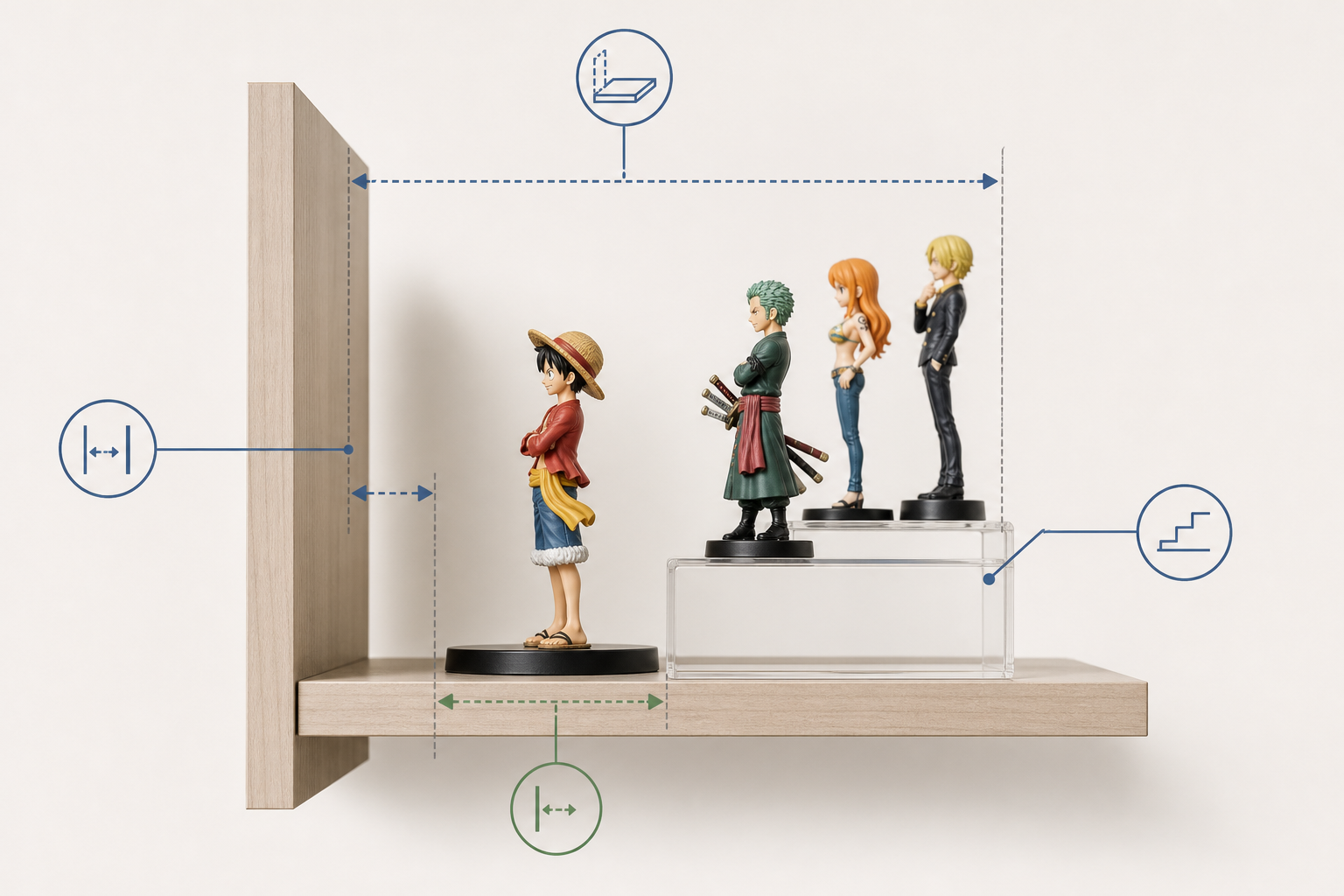
Shelf diagram showing figure base clearance and a two-tier mini figure layout.
Measure usable depth and the figure base before ordering.

Measure usable depth, not the shelf’s advertised depth

Measure from the back panel to the front edge where a figure can safely sit. If your shelf has doors, a lip, lighting, or a cable channel, subtract that space. Then compare that number with the listed base diameter or base width.

A shelf that is 10–12 inches (25–30 cm) deep gives most compact figures plenty of front-to-back room. On shelves under 10 inches (25 cm), choose upright poses and narrow bases where possible. Long swords, capes, leaning poses, and effect parts can take more depth than the character’s height suggests.

Before buying, confirm:

  • Figure height
  • Base width or diameter
  • Whether a weapon, cape, or effect part extends beyond the base
  • Whether the figure leans forward or backward
  • Whether the listing includes all support pieces

If a seller does not provide dimensions, ask. A clear answer is more useful than trying to judge size from a product photo.

Use risers to protect sightlines

Put taller pieces in the back and shorter pieces in front. A clear riser can turn one flat row into a display where every face remains visible. Keep the front row low enough that it does not block the back row’s bases or poses.

A simple layout works well:

  1. Put one focal figure at the center or one end.
  2. Place matching minis in a short front row.
  3. Raise the second row just enough to show faces and torsos.
  4. Leave a little empty space around dioramas and wide effect bases.

Avoid mixing every scale on the same shelf without a plan. It can work, but a shared element—matching clear stands, one faction, or similar base colors—helps the group look intentional.

Group by story, color, or faction

A theme gives small figures more presence. Try warm-colored pirate characters on one side and cooler-toned Marines on the other. Or build an arc shelf around a single color palette and outfit style.

If Jewelry Bonney is a must-have, our Jewelry Bonney figure guide is a useful starting point for deciding whether she belongs in an Egghead display, a Worst Generation lineup, or a character-focused shelf.

How to spot bootlegs before you buy

No single clue proves a figure is real or fake. Packaging changes between regions, reissues can use new box art, and factory flaws can appear on genuine budget figures. The most reliable approach is to check several signals together: maker information, clear photos of the exact item, a plausible price, and a seller with a workable return process.

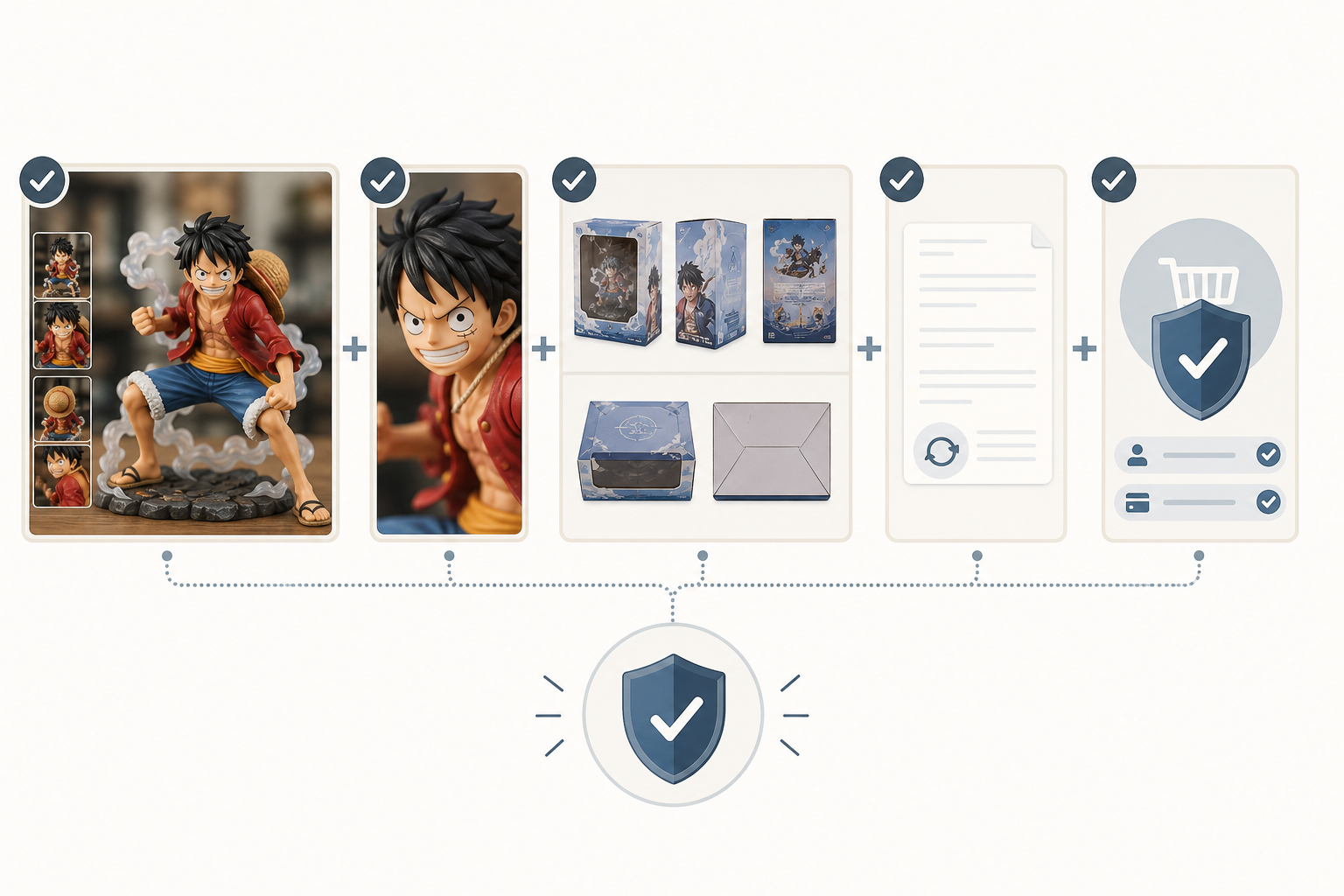
Checklist for reviewing a collectible figure listing before purchase.
Use several checks together; no single packaging or price detail confirms authenticity.

Check the listing before checkout

Use this pre-purchase checklist:

  • Look for the maker and release name. Vague titles such as “anime toy” or “PVC model” with no brand are a warning sign.
  • Ask for photos of the exact item. Request the front, sides, bottom, and any seals or labels. Stock photos alone are not enough for a used or resale listing.
  • Compare box details with known product images. Look for spelling errors, muddy printing, mismatched character art, or a missing maker name.
  • Check licensing information where it should appear. Legitimate packaging often identifies the maker and rights holders, though placement can vary by market and release.
  • Treat an unusually low price as a reason to investigate. It may be a fake, incomplete item, damaged stock, or simply a seller who has not described the condition well.
  • Read the return policy before paying. Buyer protection matters most when the item arrives different from the listing.

Inspect the figure when it arrives

A genuine item can have minor paint variance, especially at a small size. Look for a pattern of problems rather than one tiny flaw.

Potential red flags include:

  • Very soft or blurry sculpt details
  • Heavy paint bleed across several color areas
  • Rough pegs, warped bases, or a figure that cannot stand as designed
  • Strong chemical odor alongside poor paint and plastic quality
  • Missing parts that were shown in the listing or official product images

If you suspect a fake or a misrepresented item, photograph the box, labels, figure, and packing slip right away. Save the original listing and messages, then contact the seller through the platform. If needed, use the marketplace’s dispute or counterfeit-report process.

Build a collection without overspending

The best One Piece mini figures for collectors are the ones that still feel worth owning after the excitement of checkout fades. A modest plan helps you buy fewer duplicates and leaves room for the figures you truly want.

Choose a goal and a spending limit

Pick one goal for the next few months: complete a small crew, add three figures to an arc shelf, or find one standout piece for a desk. Set a budget that includes shipping, tax, protective cases, and possible replacement parts.

A simple tracking list can include character, line, seller, price, condition, and missing pieces. It helps when you see a tempting listing and cannot remember whether you already own that version.

Compare condition, not just price

A loose mini can be a great deal if it includes its base and accessories. A boxed figure may matter more if you collect packaging or expect to resell later. For either option, check for paint rub, sun fade, sticky residue, loose joints, and missing parts.

Store figures away from direct sunlight and high heat. Keep tiny accessories in labeled bags, and dust open displays gently instead of using harsh cleaners.

Browse by line, then buy the exact character

Once you know your shelf theme, browse a reliable line first and then hunt for the character that completes it. Our One Piece mini figure recommendations can help you compare more display-friendly options before you commit.

This method is more reliable than buying every popular release you see. It also makes reprints easier to use: if a matching character returns at a fair price, you know exactly where it will go.

FAQ

What counts as a One Piece mini figure for collectors?

Usually, it means a compact figure made for dense display: chibi figures, trading figures, capsule toys, blind-box figures, and smaller prize releases. There is no single universal scale for “mini,” so check the listed measurements and base size.

Are blind-box One Piece mini figures worth collecting?

They are worth it if you enjoy the surprise, like trading duplicates, or want small background characters for a display. If you need a specific character or want to complete a set efficiently, confirmed singles are usually the safer choice.

Which mini figures fit common bookshelf depths?

Most compact minis fit comfortably on a shelf that is 10–12 inches (25–30 cm) deep. For shallower shelves, prioritize narrow bases and upright poses. Always compare the figure’s base and any extended accessories with your usable shelf depth.

What is the safest way to avoid bootlegs online?

Buy from established retailers when you can. On resale marketplaces, ask for clear photos of the exact item, confirm the maker and product name, review the seller’s terms, and use a payment method with buyer protection. Do not rely on one sign, such as a box logo or a low price, by itself.

Should I keep mini-figure boxes?

Keep them if you value complete packaging, may move often, or might resell later. If space is limited, retain boxes only for your most valuable or favorite pieces and store loose figures with their bases and accessories organized together.

One Piece Anime Review – Welcome Aboard!

Hello there, folks. We’re diving into the remarkable universe of One Piece today. It’s a journey through an ocean of adventures, twists, and turns that will keep you at the edge of your seat. Stick with me, and we’ll navigate to the farthest corners of this captivating series. But don’t worry. We are not giving away any spoilers here!

One Piece, for those who are new to the seascape (pun intended!), is a widely popular Japanese manga and anime series that began in 1997 and is still ongoing today, a testament to its continuing allure. It narrates the thrilling exploits of Monkey D. Luffy and his lovable crew of pirates as they journey through a world of islands and seas in search of the ultimate treasure, the “One Piece.” From quaint, idyllic islands to darker, more foreboding territories, the story is a wild roller coaster of richly crafted characters, intricate plotlines, and compelling storytelling.

Continue reading “One Piece Anime Review – Welcome Aboard!”