
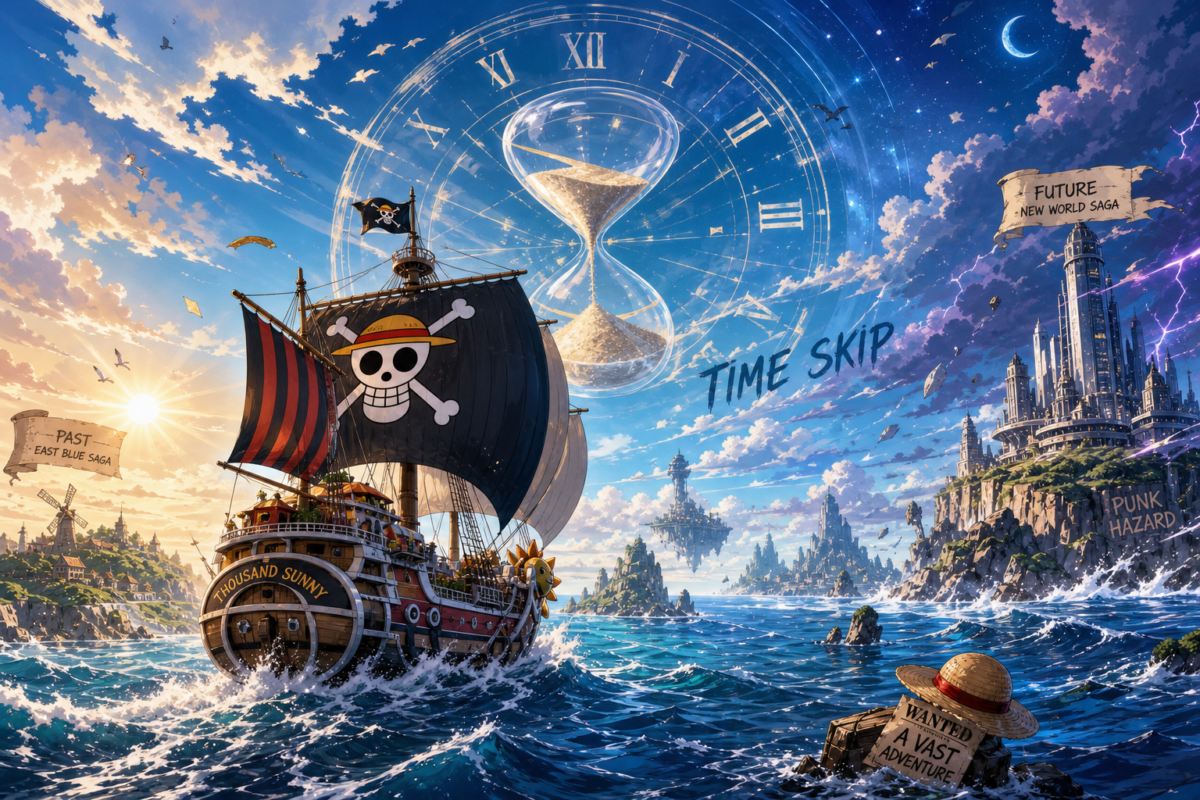
Wondering how to follow One Piece time skip changes without rewatching every episode? Compare the same character at four points: an early baseline, a pre-skip crisis, their return after the skip, and a later high-pressure moment.
That simple method shows more than new attacks or character designs. It helps you track what a character wants, how they act under pressure, where they fit in the crew, and which relationships now carry more weight.
Start with four useful checkpoints
You do not need to build a complete timeline for every character. Choose scenes that give each comparison a clear job.
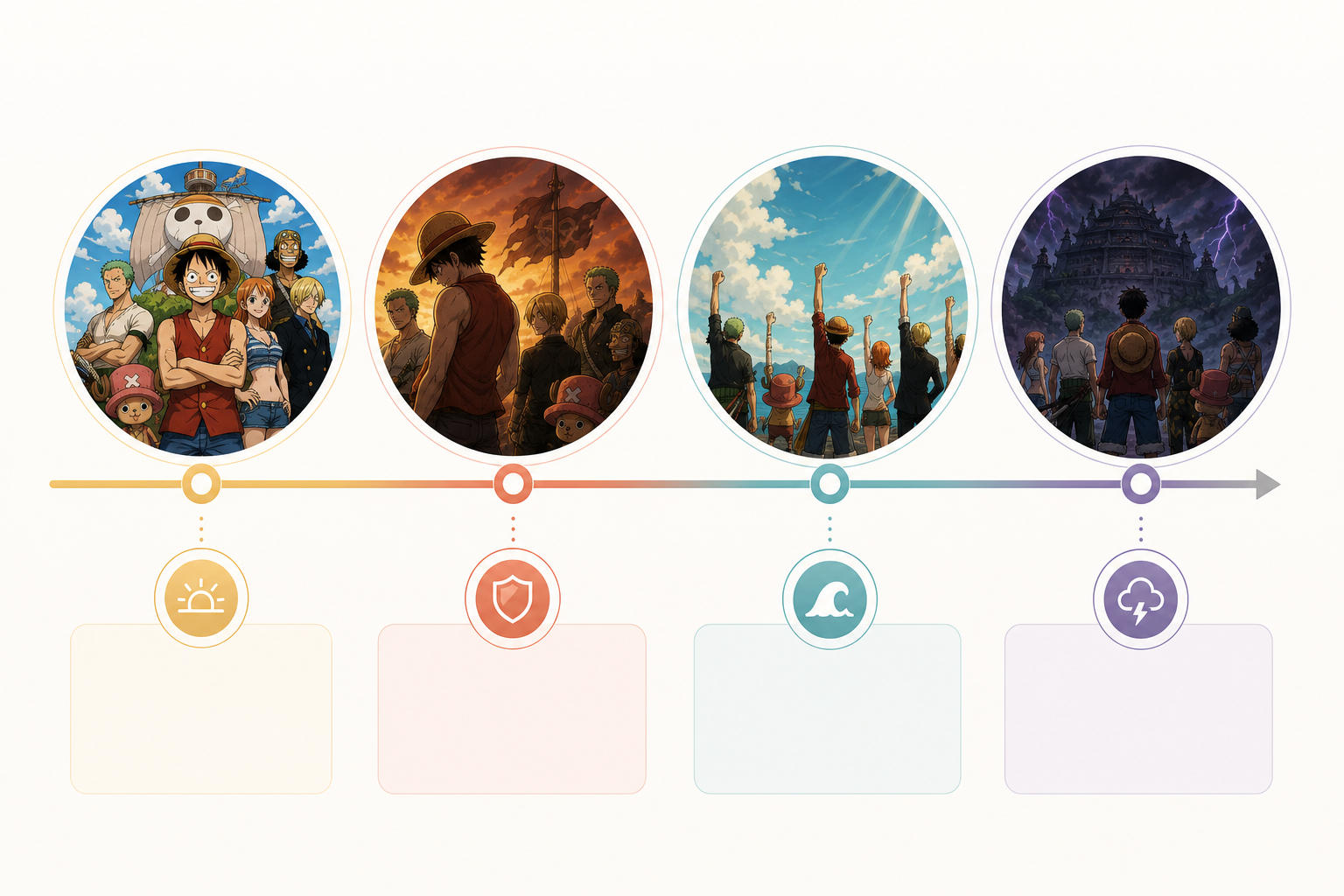
| Checkpoint | What to look for | Best use |
|---|---|---|
| Early baseline | Habits, fears, goals, and crew role | Establish who the character was |
| Pre-skip stress test | A loss, hard choice, or major fight | Reveal limits and weak spots |
| Early post-skip return | New skills, confidence, and team rhythm | Show the immediate difference |
| Later post-skip crisis | Decisions when plans fail | Test whether the change lasts |
For the Straw Hats, a useful broad route is an early adventure arc, a major pre-skip crisis, the crew’s reunion after the time skip, and a demanding New World conflict. The exact arcs should fit the character. A fighter needs battle scenes. A navigator, doctor, or strategist may be clearer in scenes where the crew must make a plan.
If you need help cutting down your watch list, use this guide to One Piece fillers to skip. Then return to the canon moments that best support your comparison.
Use the Character Change Checklist
The best answer to “what changed?” is rarely just “they got stronger.” Meaningful growth usually appears in several categories at once.
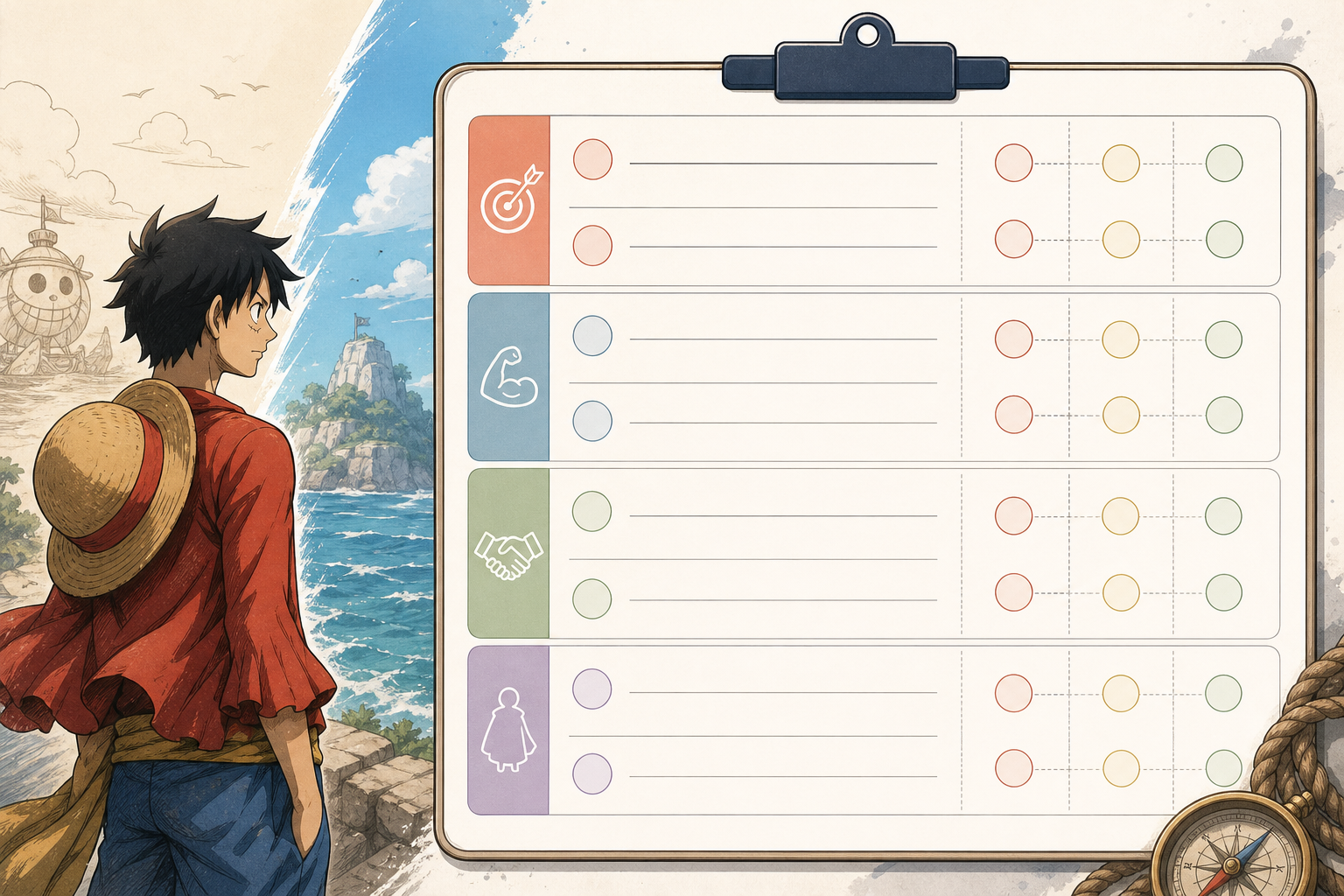
Score each category from 0 to 2:
- 0 — Little or no clear change: The character acts much as they did before.
- 1 — Noticeable shift: There is a new habit, skill, or role, but it is still limited.
- 2 — Major shift: The change affects major choices, relationships, or the crew’s strategy.
| Category | Questions to ask | What counts as evidence |
|---|---|---|
| Goals and motivation | What do they want? Has their reason changed? | A stated aim, a sacrifice, or a repeated choice |
| Abilities and fighting style | What can they do reliably now? How do they approach a fight? | A new technique, tool, tactic, or training result |
| Crew role | Who depends on them? What problem do they solve? | Leadership, support, planning, defense, or rescue |
| Confidence and judgment | What makes them hesitate? How do they respond to pressure? | A choice made during risk or failure |
| Relationships | Who do they trust, protect, challenge, or learn from? | A changed dynamic over more than one scene |
| Values and boundaries | What will they refuse to do? What will they risk? | A moral line or costly decision |
| Alliances and reputation | How do other groups react to them? | New trust, fear, responsibility, or expectations |
| Narrative function | What job does the story give them now? | A shift from comic relief to strategist, for example |
Treat visual changes as supporting evidence, not the conclusion. A new outfit or weapon matters when it connects to a new role, skill, or way of seeing the world.
Pick arcs that match the kind of change
A fair comparison matches scenes by purpose. Do not compare a character’s quiet introduction with someone else’s biggest battle and call that proof of growth.
For abilities: compare challenge to challenge
Choose one pre-skip fight that exposes a limit and one post-skip fight that demands a similar response. Ask:
- Do they have more options than before?
- Do they use those options with better control?
- Do they work with the crew differently?
- Does the new ability solve a real problem, or is it only a flashy moment?
Franky is a useful candidate for this type of analysis because equipment, combat choices, and crew utility can all be logged separately. For a character-specific starting point, read how powerful Franky is after the time skip.
For relationships: compare pressure moments
Relationship changes are often clearest when a plan breaks down. Pick scenes where the character must trust another person, accept help, take responsibility, or choose between personal pride and the crew’s needs.
Write down both sides of the exchange. It is not enough to note that a character has a new ally. Ask what they do differently because of that bond.
For goals and values: compare decisions, not speeches
A dream may stay the same across the time skip. What changes is often the character’s method, patience, or willingness to carry a burden.
Look for a choice with a cost. A character who says they want to become stronger is interesting; a character who changes their actions to protect that goal gives you stronger evidence.
Good arc pairings to consider
Use these as starting patterns rather than a rigid list:
- Early journey + pre-skip crisis: Best for fears, habits, and emotional limits.
- Major defeat + reunion after the time skip: Best for readiness, confidence, and new crew roles.
- Early post-skip conflict + later New World crisis: Best for testing whether an upgrade holds under pressure.
- Two scenes with the same relationship at stake: Best for trust, leadership, and rivalry.
For context on why the gap is such a clean comparison point, see One Piece’s two-year time skip. It can help you separate changes caused by the time away from changes that happen later in the story.
Keep an evidence log as you watch
The fastest way to lose a good theory is to rely on a vague memory. Keep a short note beside each score. You do not need a huge spreadsheet; one row per character is enough.
| Character | Category | Before | After | Evidence to revisit | Score |
|---|---|---|---|---|---|
| [Name] | Confidence | [habit or response] | [new response] | [arc, episode, or chapter] | 0–2 |
| [Name] | Crew role | [old job] | [new job] | [arc, episode, or chapter] | 0–2 |
| [Name] | Relationships | [old dynamic] | [new dynamic] | [arc, episode, or chapter] | 0–2 |
Use episode or chapter references when you can. They let readers check your take and make it clear when you are describing what happens versus offering an interpretation.
A total score can be fun for discussion, but it is not a power ranking. Two characters can both score highly for completely different reasons: one may have gained combat control, while another has become a steadier leader.
Turn your notes into a clear character comparison
Once you have four checkpoints, write the comparison in three moves: evidence, interpretation, and impact.
Evidence → interpretation → impact
- Evidence: State what the character does, says, or chooses in a specific scene.
- Interpretation: Explain the shift you think it shows. Use words such as “suggests” or “points to” when the meaning is open to debate.
- Impact: Connect that shift to the crew, a relationship, or a future decision.
Here is a fill-in template:
> Before the time skip, [character] usually responds to [problem] by [old pattern]. In [post-skip arc], they instead [new choice]. This suggests [change] because [reason]. The result is a different role in [crew, alliance, or relationship].
A five-bullet version for quick posts
- Before: What was the character’s main goal, fear, or role?
- Breaking point: What pre-skip moment exposed a limit?
- After: What is visibly different when they return?
- Proof: Which later scene tests that difference?
- Why it matters: How does it alter a relationship, plan, or crew role?
This structure keeps an analysis grounded. It also stops a single impressive move from doing all the work in your argument.
Example: use Usopp to test the method
Usopp is a strong practice subject because his growth can be tracked through skills, confidence, and his place in the crew. Do not reduce the comparison to whether he wins a fight. Log how he prepares, when he commits, what scares him, and how others rely on him.
A simple Usopp worksheet might read:
- Goal: Compare what he says he wants with what he trains or prepares to do.
- Abilities: Note new tools and how he uses range, timing, or support.
- Confidence: Compare hesitation with moments when he takes initiative.
- Crew role: Track when his choices help the group move forward.
- Relationships: Watch how trust works both ways between Usopp and the crew.
For a fuller case study, read How Usopp Changed After the One Piece Time Skip. Use it as a model for organizing your notes, then apply the same checklist to another character.
Avoid the most common comparison mistakes
A stronger analysis is not longer. It is more consistent.
- Do not cherry-pick wins. Include a setback or difficult choice from each era.
- Do not confuse a new design with a new personality. Show the action that supports the claim.
- Do not treat every post-skip change as training. Some shifts come from new circumstances, allies, or responsibility.
- Do not turn every score into power scaling. Goals and relationships matter as much as combat.
- Do not make one scene carry the whole argument. Look for a pattern across at least two moments.
FAQ
How can I follow One Piece time skip changes without rewatching everything?
Pick four checkpoints: an early baseline, a pre-skip stress test, an early post-skip return, and a later crisis. Compare the same categories at each point: goals, abilities, crew role, confidence, and relationships.
Which arcs show the clearest post-skip shifts?
The clearest arc depends on what you are tracking. Early post-skip material is useful for immediate skill and design changes. Later, high-stakes arcs are better for judging leadership, values, and whether a character’s new approach holds up under pressure.
What categories matter most?
Start with goals, abilities, relationships, and crew role. Then add confidence, values, alliances, and narrative function if you want a deeper comparison. These categories prevent the analysis from becoming a list of attacks.
Is this page about TIME magazine or One Piece?
This guide is about One Piece’s narrative time skip. If you were looking for the news magazine, visit TIME’s official site.