
For anime vs manga pacing for Alabasta, the choice is clear once you know what you value. Read the manga for the fastest, cleanest flow. Watch the anime for music, performances, and more time with major scenes. A hybrid route works best if you want both.
Alabasta has a strong central drive: stop a civil war before it is too late. The manga keeps that drive moving. The anime can make the arc feel larger and more emotional, but it also spends more time on recaps, reactions, travel, and scene transitions. That is not the same thing as a huge filler arc dropped into the middle of the story.
Anime vs manga pacing for Alabasta: manga, anime, or hybrid?
Choose the route that matches your tolerance for slower episodes.
| If you want… | Best route | Why |
|---|---|---|
| The quickest path through the plot | Manga | Scene changes and reveals arrive with less delay. |
| Voice acting, music, and animated fights | Anime | Performances and score can add weight to emotional scenes. |
| Strong pacing without losing favorite moments | Hybrid | Read the full arc, then watch scenes you want to revisit. |
The manga is the safer pick if you are already worried about pace. The anime is a good pick if you enjoy letting scenes linger and do not mind slower progress from one episode to the next.
For a plot refresher before choosing, see Alabasta Arc One Piece Explained: Story, Battles & Why It Matters. It is useful when you want to find a favorite conflict again without rewatching every stretch.
Why Alabasta feels faster in the manga
The manga gives you control. You can pause on a panel, move quickly through a conversation, or turn the page as soon as a reveal lands. That control matters in Alabasta because the arc shifts between the Straw Hats, Vivi, the rebel army, and Baroque Works.
The anime has a fixed runtime. It must make each episode fill that space. As a result, it can add time through longer establishing shots, repeated reactions, recap material, and extra pauses before or after a line. Those choices can help a scene breathe. They can also weaken the sense that the clock is running out.
A simple rule helps: if you feel the characters are repeating the goal rather than changing the situation, the manga will probably feel better in that section.
Filler and padding are not the same thing
Fans often call every slow moment “filler,” but two different things are involved:
- Filler is anime-original material that is not part of the manga story.
- Padding is canon material presented more slowly through added pauses, reactions, recaps, or extended movement.
For Alabasta, padding is usually the bigger pacing issue. The main story is still there; it just takes longer to reach the next decision, clash, or reveal.
The long-running weekly format helps explain why adaptations sometimes slow down rather than race through source material. CBR notes that the anime added several Ace scenes around this era while discussing periods when the show drew close to the manga. That is a useful example of how added material can enrich a character’s presence while changing the arc’s rhythm. Read the CBR overview.
Where the anime slows down most
The anime is not uniformly slow. Alabasta has lively introductions, strong confrontations, and emotional high points. The slowest feeling usually comes from the space between those moments.
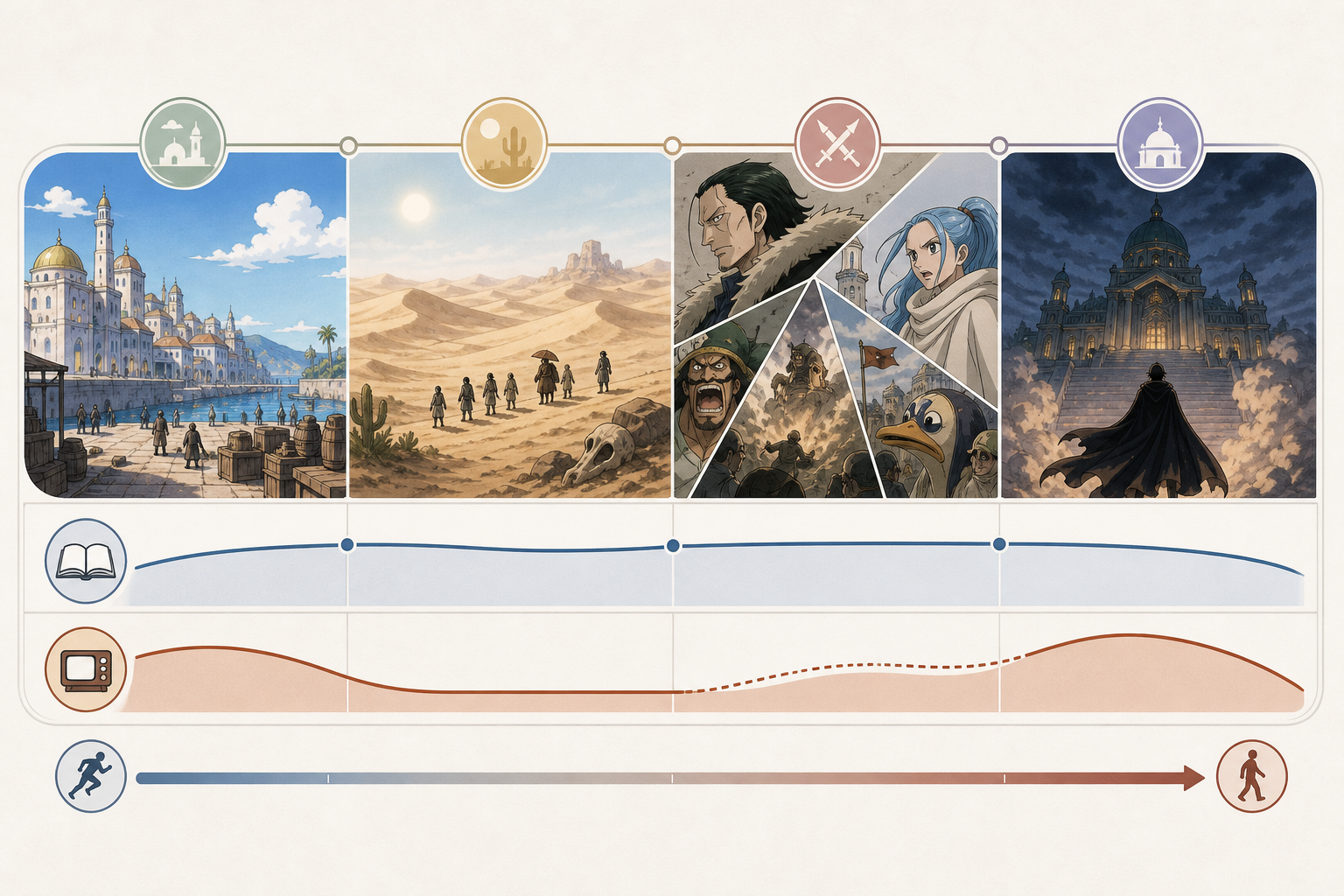
Setup and arrival: usually a smooth start
The early part of Alabasta has fresh places, clear goals, and new threats. Both versions benefit from that momentum. The anime may take a little longer to settle into scenes, but the novelty keeps it moving.
If you are anime-only, this is a good place to start without worrying too much about pace. You can always switch later if the middle loses you.
Desert travel and pursuit: the main slow zone
Travel-heavy scenes are where the difference is easiest to feel. In the manga, movement across the country can take only the panels needed to set up the next problem. In the anime, the same journey may include more running, more cutaways, and more reactions to the same urgent situation.
That matters because Alabasta depends on a deadline. When the story repeatedly stops to remind you of that deadline, it can feel less urgent instead of more urgent.
If the anime starts to drag here, do not force yourself through it out of completionism. Read until the next major confrontation, then return to the anime for the scenes you most want to hear and see.
The run-up to the climax: broader scope, softer momentum
As several conflicts unfold at once, the anime often cuts between groups. This can make the kingdom feel busy and large. The trade-off is that each return to a fight may need to re-establish where everyone is and what they want.
The manga usually feels sharper in this stretch because it gets to the next consequence faster. If your priority is understanding the chain of events in the civil war, reading is the clearest route.
For more on why those political stakes matter, read What Makes Alabasta Feel Like a Political Thriller?.
The climax: where the anime can earn its extra time
At the emotional peak, slower timing is not always a flaw. A held silence, a voice performance, or a music cue can make a moment hit in a way a page cannot. The anime is often most rewarding when it commits to a decisive emotional beat rather than stretching a transition.
This is why a hybrid approach is so effective. Let the manga carry you through the parts built on movement and urgency. Let the anime handle the scenes where sound and performance are the point.
Which medium delivers the key beats best?
There is no universal winner. Each format has a different strength.
Reveals: manga usually has cleaner timing
The manga has the advantage for surprise. Oda can control the reveal with panel order and page turns, while you control how long you sit with the result. There is no recap, preview, or extended pause between the setup and the payoff.
If you want the cleanest first experience of a major Alabasta reveal, read it first. You can then watch the animated version as a second pass.
Fights: clarity versus spectacle
The manga is often easier to read when you want to follow cause and effect: who moved, what changed, and why the move matters. The anime adds sound, motion, and impact. That can make a blow feel bigger, but a longer exchange can also make a fight feel less direct.
Watch the anime if spectacle is your main goal. Read the manga if you want a brisk, easy-to-follow version of the fight.
Character moments: anime can add warmth, manga keeps pressure on
Vivi’s story works because every delay has a cost. The manga protects that pressure well. The anime can give her fear, resolve, and exhaustion more texture through voice acting, but repeated worry beats may feel redundant if you are already invested.
Crocodile benefits from both formats in different ways. The manga preserves his efficiency and the pace of the threat. The anime can give his entrances more atmosphere. If you want to compare how adaptations frame a character, use this practical rubric for anime and manga character portrayals.
For a version-by-version look at his role, see the Crocodile timeline across anime, manga, and live action.
The best hybrid method for Alabasta
A hybrid route should save time without turning the arc into homework.
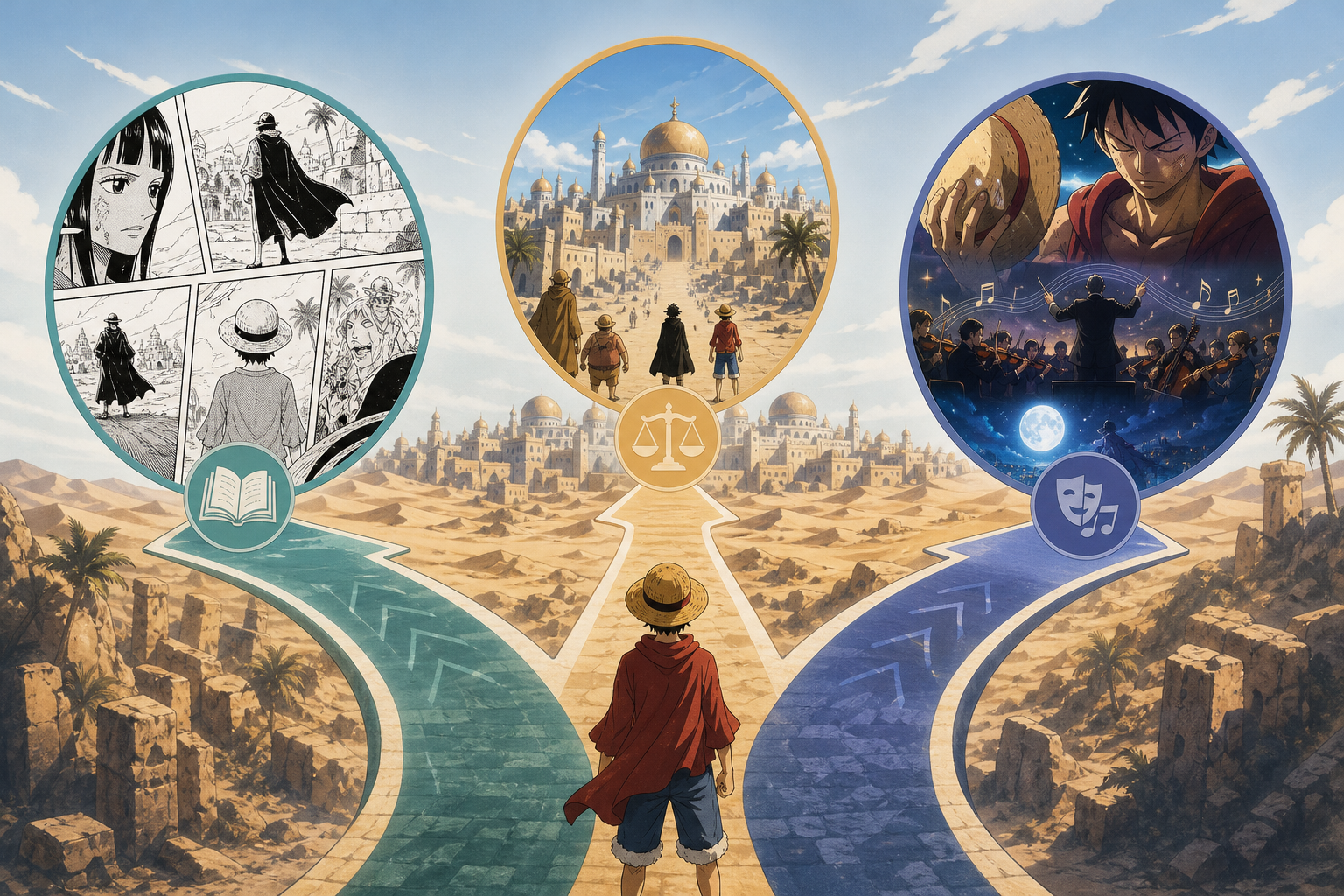
- Read the full manga arc first if pace is your concern. You will get the core story, the reveal timing, and the civil-war escalation in its tightest form.
- Mark the scenes that moved you. These might be a confrontation, a character speech, or a fight finish.
- Watch those scenes in the anime afterward. This lets the voices, music, and animation add to an experience you already understand.
- Skip recaps and previews when you watch. They are the easiest minutes to cut without losing story.
- Switch formats when your interest drops. Read through travel or repeated cutaways; watch when a scene is built around performance or spectacle.
This method also avoids a common trap: treating the anime and manga as rivals that must be consumed in only one “correct” way. They are two presentations of the same arc, with different pacing tools.
What Alabasta teaches about later One Piece pacing
Alabasta is a useful test case for the larger One Piece pacing debate. It shows the basic trade-off that appears throughout a long-running adaptation: added time can create atmosphere, but it can also reduce momentum.
If Alabasta’s slower stretches bother you, a manga-first habit may serve you well in later arcs too. If you love event episodes, performances, and extended action, the anime still has plenty to offer. Just give yourself permission to skip recaps, fast-forward repeated material, or use the manga as your map.
The key is not to ask which version is objectively superior. Ask what you want from this particular arc: a fast political adventure, an emotional animated journey, or a mix of both.
FAQ
Where does the anime slow the arc most?
The travel-heavy middle and the run-up to several simultaneous conflicts are the most likely slow zones. Expect more reaction shots, cutaways, and reminders of the current goal than in the manga.
Does Alabasta have filler arcs, or is it mostly canon padding?
The pacing concern is mostly canon material being expanded, not a giant anime-only detour inside the core Alabasta story. The distinction matters: padding can still slow the experience even when the plot remains canon.
Is the manga better for following the civil-war plot?
Usually, yes. The manga moves more directly from action to consequence, which makes the political pressure and shifting plans easier to track.
Which medium delivers the biggest reveals best?
Read first for the tightest reveal timing. Watch afterward if you want the added force of voices, music, and animation. That order gives you both strengths without risking a slower first impression.
What is the best route if I only have time for one version?
Read the manga if speed and clarity matter most. Watch the anime if you value the full audiovisual experience and are comfortable with a slower rhythm.