
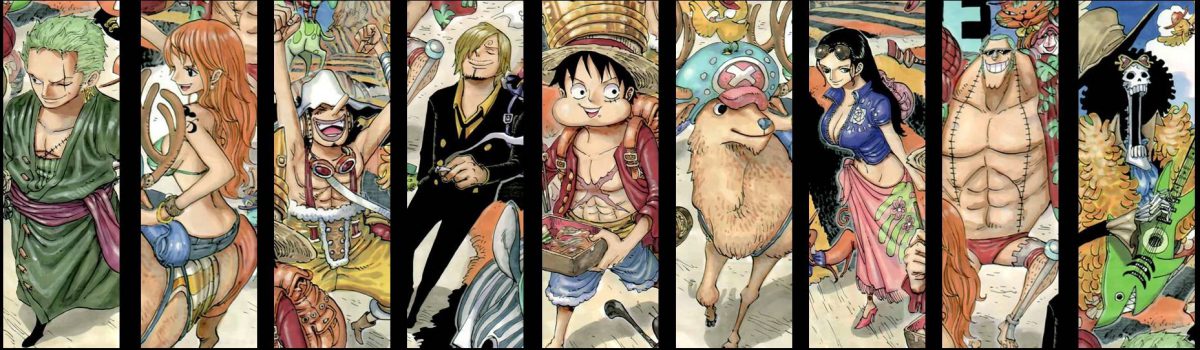

Are One Piece live action changes worth it? For newcomers, mostly yes. The series makes East Blue easier to follow by building a clear season-long Marine plot and trimming side stories. For manga and anime fans, the answer is more mixed: several changes improve TV pacing, but some cuts reduce the odd, patient emotional build that gives the original its heart.
This comparison covers Season 1 spoilers for the live-action series and early East Blue spoilers for the manga and anime. It judges changes by what they do for the story, not by whether every scene matches.
The short verdict: a strong entry point, not a replacement
The live-action series is a good way into One Piece if the length of the anime or manga feels daunting. It introduces Luffy’s dream, the Straw Hats’ goals, and the pirate-versus-Marine conflict with a clean forward drive.
It is not the full East Blue experience. The original has more room for detours, small acts of kindness, and the crew simply spending time together. Those scenes are not filler; they are often why later emotional moments work.
A fair rule for judging any adaptation is this: a plot change earns its place when it protects the emotional promise of the scene. In One Piece, that promise is usually freedom, loyalty, ridiculous courage, or the choice to protect someone weaker than yourself.
For a broader reaction to the season as a whole, read our One Piece live-action review. If you are new to the world itself, what the One Piece is and why it matters is a useful spoiler-light starting point.
How to judge the changes fairly
An eight-episode season cannot give every East Blue subplot the same time as the manga or anime. The live-action therefore combines scenes, removes some supporting characters, and moves information earlier. A comparison of the adaptations also notes that supporting roles and fights were substantially scaled down or changed (Popverse’s rundown of the differences).
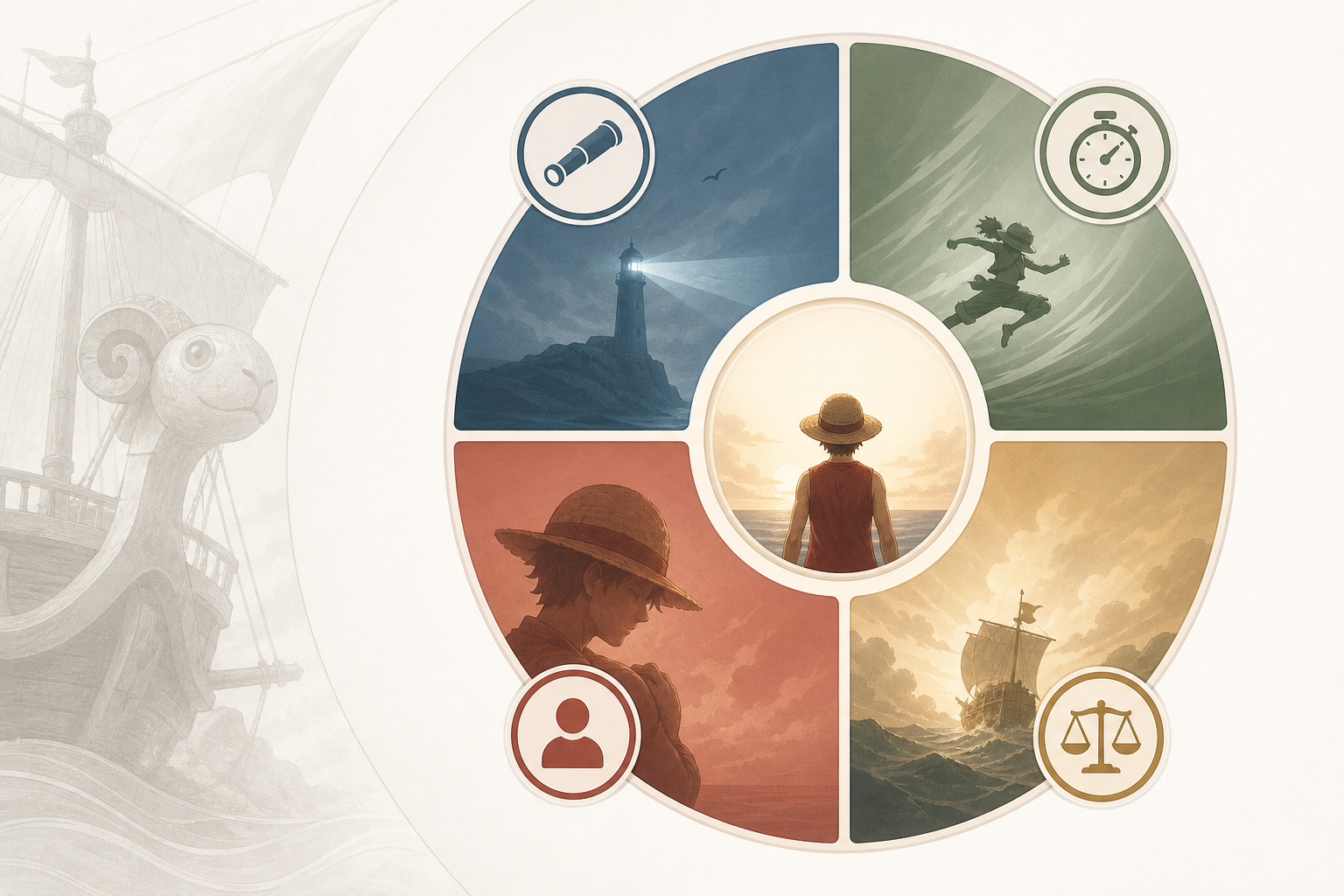
That does not automatically make a change good or bad. Use four questions instead:
| Test | What it asks | Why it matters for newcomers |
|---|---|---|
| Clarity | Is each character’s goal easy to understand? | New viewers need firm footing in a very strange world. |
| Pacing | Does the episode move without skipping the emotional setup? | Speed helps only if the payoff still lands. |
| Character intent | Do choices still feel true to Luffy, Nami, Zoro, Usopp, and Sanji? | The crew matters more than exact plot order. |
| Themes and stakes | Do freedom, dreams, sacrifice, and found family still carry weight? | These are the core of One Piece. |
The best changes score well in all four areas. The weaker ones usually gain pace by cutting the quiet beat that explains why anyone should care.
The biggest Season 1 changes, arc by arc
Romance Dawn: Garp becomes the season’s spine
The largest structural change is Garp. The live-action gives him a far bigger role from the opening and follows his pursuit of Luffy through the season. It also reveals his family connection to Luffy far earlier than the manga and anime do.
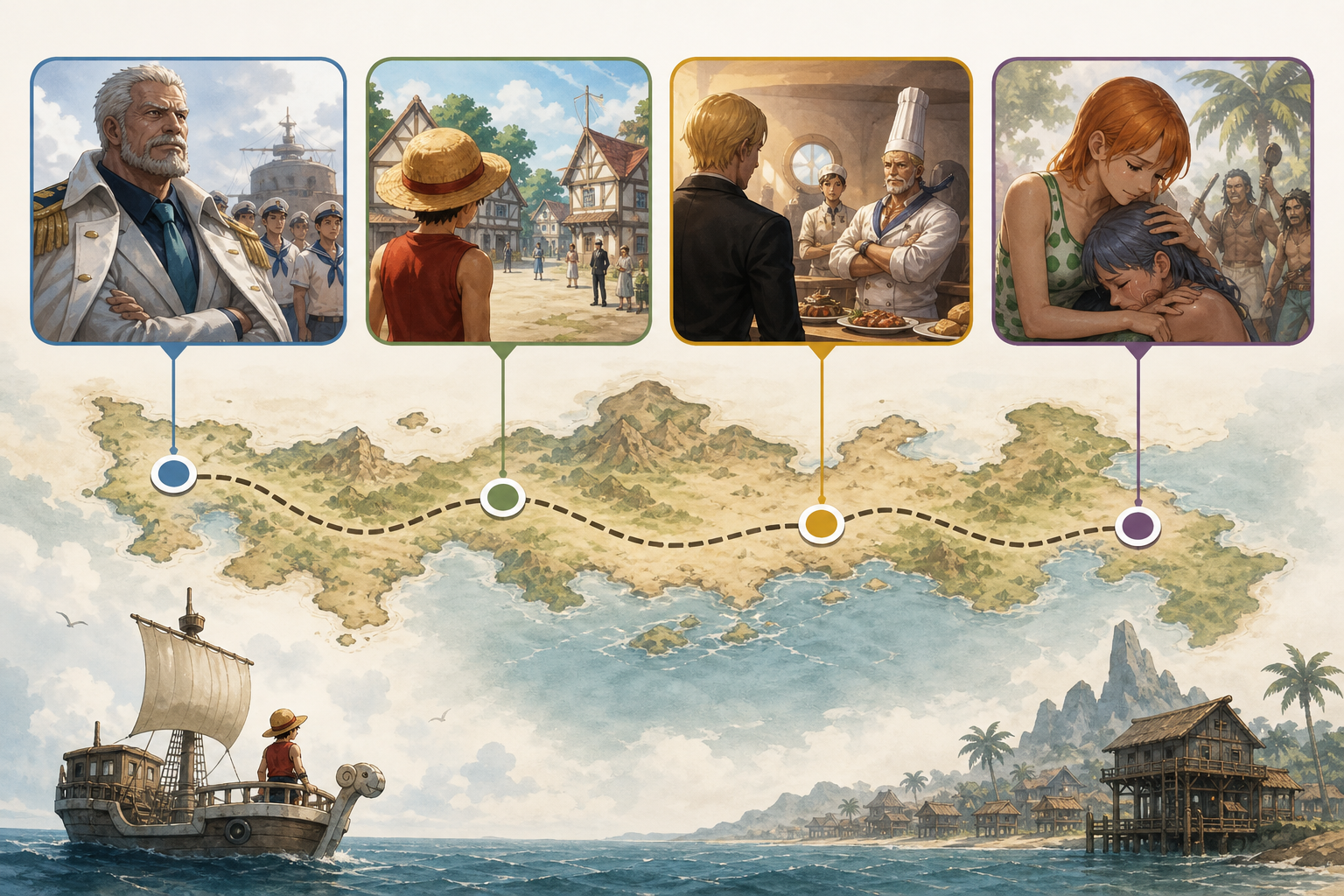
For a first-time viewer, this works. Garp gives the season a continuing source of pressure between island adventures. He also makes the Marines feel like a real institution rather than a new obstacle every few episodes. IGN identifies Garp’s expanded presence as one of the adaptation’s major departures from the source material (IGN’s comparison of the biggest changes).
The trade-off is surprise. The original lets Luffy’s world expand before tying him so directly to a powerful Marine. The early reveal also shifts attention away from the Straw Hats during their first stretch as a crew.
Verdict: Worth it for structure and newcomer clarity; less satisfying if you value the original’s slower reveals.
The show also gives Zoro an early fight with Mr. 7, a Baroque Works agent. It is an efficient way to show that Zoro is already dangerous and to hint that larger criminal groups exist beyond East Blue. Still, it is more setup than East Blue needs. The scene works as a quick hook, not as a major emotional gain.
Orange Town: Buggy gets sharper, while the arc gets leaner
Orange Town keeps the main idea intact: Buggy is silly, cruel, and genuinely threatening. That balance is important. His powers and theatrical style could have felt disconnected from a more grounded format, but the live-action treats him as both a joke and a danger.
The arc loses some of the original’s wider town texture and supporting conflict. Yet it keeps a key emotional test in Chouchou, the dog protecting his owner’s store. That small story tells viewers who Luffy is: he takes another person’s grief seriously, even when the situation looks absurd.
The show also uses Buggy to feed information toward the larger Arlong plot. This makes the season feel connected, though it slightly reduces the sense that each island has its own distinct problem.
Verdict: A mostly successful compression. It preserves Luffy’s values and gives Buggy a clear live-action presence, even if the town feels less lived in.
Syrup Village: faster momentum, less room for Usopp
Syrup Village is where compression costs the most. Usopp still has the traits that matter—he lies, he panics, and he shows up when it counts—but the live-action has less time to let those traits clash before the crew accepts him.
The adaptation also changes the shape of Kuro’s plot and removes figures such as Jango and the Usopp Pirates. Moving much of the danger into Kaya’s mansion gives the episode a tighter suspense structure. It is easier to follow than a longer village battle, and it lets Kaya, Kuro, and Usopp share more direct conflict.
But the cut characters do have a cost. In the original, Usopp’s local ties help show that his tall tales grew from loneliness, imagination, and a real wish to protect people. The live-action gets to the point faster, but his place in the crew can feel less earned.
Merry’s fate also makes the Going Merry’s handover more bittersweet. The ship still represents a home the crew receives from someone who believes in them, which is the important part.
Verdict: Good episode-level pacing; a weaker version of Usopp’s gradual emotional case.
Baratie: Sanji’s values survive, but the world feels smaller
Baratie needs to do two things: prove that Zoro has a mountain to climb, and show why Sanji’s kindness is non-negotiable. The live-action succeeds with Mihawk. Zoro’s loss still establishes the gap between his dream and his current strength.
The larger departure is the absence of Don Krieg and Gin as the central conflict at Baratie. Their removal saves time and avoids adding another villain plot just before Arlong Park. It also changes the texture of Sanji’s introduction. In the original, hunger, debt, mercy, and violence collide through Gin and Krieg’s crew. That pressure makes Sanji’s belief that no hungry person should be turned away feel especially hard-won.
The live-action still gives Sanji a strong reason to leave with Luffy, and Zeff remains central to his dream. But the thematic test is less severe, so the message has less bite.
Verdict: Strong for Zoro and efficient for the season; thinner for the full moral weight of Sanji’s arc.
Arlong Park: Nami remains the heart, with a different rhythm
Arlong Park is the make-or-break section of East Blue because Nami’s pain must feel personal and communal at the same time. The live-action preserves the essential turn: Nami has carried an unbearable burden alone, and Luffy answers her request for help without demanding a perfect explanation.
Several details around Coco Village and its people are streamlined or reshaped. That makes Nami’s situation easier to grasp quickly, but it leaves less time for the village’s shared endurance to build. Genzo and Nojiko still matter, yet the village can feel less like a community with its own history than it does in the manga and anime.
The show also moves quickly through some of the buildup around Arlong’s control and the corrupt Marine connection. The result is clear and direct. The loss is dread: the original lets the audience sit longer with the sense that Nami cannot escape through effort alone.
Verdict: The emotional core lands, which matters most. The original builds more tension around it and gives the villagers greater weight.
Changes that help storytelling
The Marine and Garp plot gives the season a shape
East Blue was originally built as a chain of adventures. That format is part of its charm, but it can feel episodic to someone trying One Piece for the first time. The expanded Garp and Koby thread gives the live-action a TV-season spine: Luffy is gaining a crew while the Marines close in.
It also gives Koby more immediate purpose. He becomes a contrast to Luffy rather than simply a character who exits early. Both want to pursue a dream; they just choose opposite sides of the law.
Fewer moving parts make character goals clearer
The live-action is often good at stating what a character wants, then putting that want under pressure. Luffy wants the Pirate King title and a crew who choose him freely. Zoro wants to become the greatest swordsman. Nami wants freedom from Arlong. Sanji wants the All Blue.
That directness is helpful for newcomers, especially in a world with Devil Fruits, bounties, Marines, pirates, and many unfamiliar names. If the show convinces a viewer to care about those dreams, it has done its job.
Some powers translate best in simple, readable beats
Luffy’s stretching and Buggy’s separated body are hard effects to sell in live action. The series usually gives those powers room to read clearly instead of flooding every fight with constant movement. Results will vary by viewer, but the approach supports performance and jokes rather than treating every power as a visual-effects display.
If One Piece’s mix of comedy and sincerity is what you love most, our look at why the One Piece anime is so famous adds useful context for why this tonal balance is difficult to adapt.
Changes that weaken themes or stakes
Lost downtime can make the crew feel assembled too fast
The original spends time on meals, jokes, arguments, and minor acts of trust. These moments make the Straw Hats feel like a found family before the story asks them to risk everything for one another.
The live-action gets the key milestones, but it has fewer of these small bridges between them. As a result, a new viewer can understand why the crew forms while still missing some of the warmth that makes the group unforgettable.
Supporting characters are often the emotional proof
Chouchou, the Usopp Pirates, Gin, Johnny, and Yosaku do not all advance the main plot. They show what the main characters mean to ordinary people and to their pasts. When supporting roles disappear, the plot becomes cleaner, but the world can feel less crowded and less human.
This is why a scene-by-scene checklist is not enough. A cut may seem minor until you notice that it removed the person who made a hero’s kindness, fear, or loyalty visible.
Earlier answers can soften mystery
The early Garp reveal is the clearest example. It gives the season an immediate hook, but it trades away a later surprise. Other changes make villain plans and character motives more explicit sooner as well. That helps accessibility, yet One Piece often gains power from letting questions sit before it answers them.
So, are One Piece live action changes worth it for you?
If you are brand new: Yes. Start with the live-action if it feels approachable, then try the manga from Chapter 1 or the anime from Episode 1 if you want the fuller emotional build. Do not treat the show as a substitute; treat it as an invitation.
If you are anime-only: It is a fun alternate take. Expect different timing, fewer side characters, and a more connected season plot. Compare the moments you care about rather than counting every missing scene.
If you are manga-first: Go in ready to judge function over panel accuracy. The strongest deviations clarify motives or create a clean TV arc. The weakest ones cut the strange little moments that make East Blue feel alive.
Bottom line: The One Piece live action changes worth it question has a split answer. They are worth it when they make the story clearer without changing why a character fights. They are less successful when speed replaces the friendships, communities, and small kindnesses that give the big victories their force.
FAQ
Is the One Piece live-action faithful to the manga and anime?
It is faithful to the main character goals, major East Blue destinations, and emotional milestones, but it is not scene-for-scene faithful. Events are moved, merged, or removed to fit an eight-episode season.
What are the biggest Romance Dawn changes?
Garp has a much larger role throughout the season, his connection to Luffy is revealed much earlier, and Zoro receives an early confrontation with Mr. 7. These choices create a clearer continuing plot but reduce some later surprise.
Why does the live-action reveal Garp as Luffy’s grandfather earlier?
The early reveal helps make Garp’s pursuit personal and gives the season a recurring conflict outside the island villains. The trade-off is that the original’s delayed reveal has more shock value.
Does the live-action weaken Nami’s Arlong Park story?
Not at its core. Nami’s burden and Luffy’s response remain effective. The main loss is time: the manga and anime spend longer building the village’s pain and the sense that Nami has no way out.
What should I watch or read after Season 1?
For the fullest version of East Blue, start the manga at Chapter 1 or the anime at Episode 1. If Season 2 has you curious about what comes next, our Alabasta arc guide explains why the next major saga matters without treating the live-action as a one-to-one copy.